The increasing lean towards edge computing shows the global rethinking of how enterprises handle data processing.
Rather than sending information on a round trip to centralised cloud servers, organisations are pushing to run AI models directly on devices at the network’s edge – factory floors, autonomous vehicles, remote wind farms.
This approach slashes latency, cuts bandwidth costs and enables split-second decision-making that simply isn’t possible when data must travel hundreds of miles and back.
As a result, the market has fractured into distinct camps.
High-performance platforms target demanding physical AI applications in robotics and autonomous systems, while cloud providers have built orchestration frameworks prioritising security and scalability across millions of distributed devices.
Meanwhile, optimisation platforms are democratising machine learning (ML) deployment on highly constrained hardware through tinyML approaches.
Market leadership will emerge from specialised competence rather than attempting to be everything to everyone – and these are some of the top edge AI solutions doing just that.
10. FogHorn Lightning

Company: FogHorn Systems, acquired by Johnson Controls
CEO: David King
Specialisation: High-speed, patented Complex Event Processing for real-time industrial operational technology
FogHorn Lightning takes a different tack to edge AI solutions by analysing streaming sensor data directly at the source using Complex Event Processing technology – which examines data patterns as they occur rather than after the fact.
The patented method has delivered tangible results in predictive maintenance and operational improvements across manufacturing and energy sectors, where unexpected downtime can cost millions.
David King leads the industrial IIoT strategy at FogHorn Systems, concentrating on maximising real-time operational efficiency.
His challenge lies in integrating legacy operational technology networks with newer IT infrastructure while maintaining the ultra-low latency decision-making that industrial environments demand.
9. Edge Impulse

Company: Edge Impulse
CEO: Zach Shelby
Specialisation: Development platform democratising tinyML model creation, deployment and optimisation for embedded systems
Edge Impulse has established itself as the go-to development platform for tinyML, which refers to ML on resource-constrained microcontrollers – think sensors and devices with minimal memory and processing power.
The Edge Optimised Neural compiler won Best Innovation of the Year in 2021 after demonstrating it could reduce RAM consumption by 25-55% compared to TensorFlow Lite for Microcontrollers.
As CEO, Zach Shelby, who previously pioneered IoT standards through Sensinode, focuses the company on making development accessible for embedded engineers who may not have deep machine learning expertise.
The platform tackles the difficult challenge of deploying sophisticated models on systems with severely limited memory and processing power.
8. HPE Ezmeral Edge

Company: Hewlett Packard Enterprise (HPE)
CEO: Antonio Neri
Specialisation: Unifying edge infrastructure, data ingestion and cloud-enabled analytics for digital transformation
CEO Antonio Neri, who has led HPE since 2018, articulates an “edge-centric, cloud-enabled, data-driven” vision that recognises how enterprises are becoming more geographically dispersed.
This is why HPE Ezmeral unifies data, containers and applications across distributed enterprise edge environments, which proves particularly valuable for industrial digital transformation where operations span multiple sites.
The platform centralises data ingestion and manages complex networking while providing a unified cloud experience.
HPE’s clients wrestle with mitigating inconsistent infrastructure and optimising resource utilisation in hybrid environments – challenges that become more pronounced as edge deployments scale across widely dispersed industrial sites with varying network conditions.
7. VMware Cognitive Edge

Company: VMware (Broadcom)
CEO: Hock Tan
Specialisation: Consistent cloud-native operations and security for applications across hybrid edge deployments
VMware Cognitive Edge delivers cloud-native services across hybrid edge environments using the VMware Tanzu framework.
What sets it apart is the Vulnerability Insights tool, which provides precise vulnerability attribution and in-context triage – helping teams identify which applications actually require patching without wading through false positives.
Teams across workforces face ongoing challenges managing hidden cloud costs while maintaining security across diverse deployment environments that often lack consistency.
So this solution aligns with the CEO’s infrastructure software vision at Broadcom, which acquired VMware and has been methodically reshaping its product portfolio ever since.
6. Dell EMC Streaming Data Platform
Company: Dell Technologies
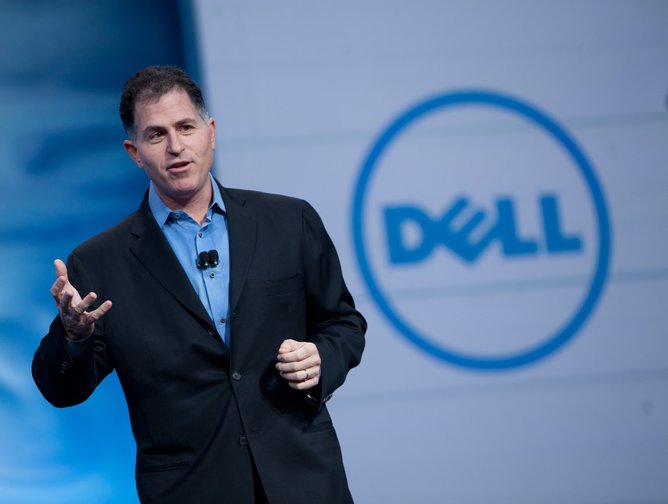
CEO: Michael Dell
Specialisation: Enterprise streaming analytics and storage platform supporting high-velocity AI and RAG data pipelines
Dell’s platform handles the analytics and storage demands of high-velocity data flows, forming a critical component of the broader Dell AI Data Platform.
It supports inferencing and Retrieval-Augmented Generation pipelines, which combine large language models (LLMs) with external knowledge sources, alongside Dell PowerScale and Nvidia GB200/GB300 accelerators.
CEO Michael Dell and Chief Technology Officer (CTO) John Roese have positioned AI and edge computing at the centre of Dell’s infrastructure strategy, recognising where the market is heading.
Organisations using the platform face the ongoing challenge of managing massive volumes of unstructured data while extracting insights quickly enough to accelerate AI outcomes across distributed operations.
5. IBM Edge Application Manager

Company: IBM
CEO: Arvind Krishna
Specialisation: Autonomous management of AI workloads across distributed enterprise edge devices via OpenShift
Built on Red Hat OpenShift, IBM Edge Application Manager provides enterprise-grade autonomous management for edge applications.
The business case is compelling because: Pfizer forecasts 20% cost avoidance for new projects using the solution, while Sixt reported a 70% decrease in problem detection and resolution time – metrics that matter when managing distributed infrastructure at scale.
IBM’s clients can use IBM Watson’s AI capabilities or build their own ML models to manage physical assets.
CEO Arvind Krishna guides IBM’s hybrid cloud strategy, which encompasses the edge computing portfolio.
As a result, the platform addresses a genuine pain point around workload distribution across highly dispersed industrial sites and has found applications in autonomous vehicle use cases where reliability is paramount.
4. Google Coral/Edge TPU

Company: Google (Alphabet)
CEO: Sundar Pichai
Specialisation: Low-power ASIC designed specifically for accelerating machine learning inference workloads
Moving onto platforms for high-performance edge computing, Coral centres on the Edge TPU, an application-specific integrated circuit that Google designed specifically for ML inference on low-power devices.
The chip executes MobileNet V2 models at high frames per second while sipping power, making it suitable for applications including smart grid management where TPUs analyse datasets for real-time decision-making that optimises energy usage across networks.
Director of the platforms Billy Rutledge, spearheaded the platform’s introduction.
The system now focuses purely on inference rather than training, so model development must occur elsewhere before deployment to these lightweight chips.
CEO Sundar Pichai addresses broader AI societal impact challenges at Alphabet while the Coral team concentrates on the practical engineering of edge deployment capabilities.
3. AWS IoT Greengrass

Company: Amazon Web Services (AWS)
CEO: Matt Garman
Specialisation: Open-source runtime for building, deploying and securely managing intelligent device software
Greengrass operates as both an open-source edge runtime and cloud service for managing intelligent device software at scale – a dual approach that gives enterprises flexibility.
Bio-Rad, the developer and manufacturer of specialised technological products for the life science research and clinical diagnostics markets, has deployed Greengrass alongside Amazon SageMaker to support secure, high-throughput ML model execution in laboratory settings where reliability matters.
The v2.16 update brought a nucleus lite version supporting the TPM2.0 specification, a hardware-based security standard, plus system log forwarding to CloudWatch for identifying deployment issues in remote locations where engineers can’t physically access devices.
Implementation demands adherence to least privilege principles for component execution, avoiding hardcoded credentials that could create security vulnerabilities.
CEO Matt Garman drives the overarching AWS strategy that encompasses edge computing, cloud services and the machine learning infrastructure tying them together.
2. Azure IoT Edge
Company: Microsoft
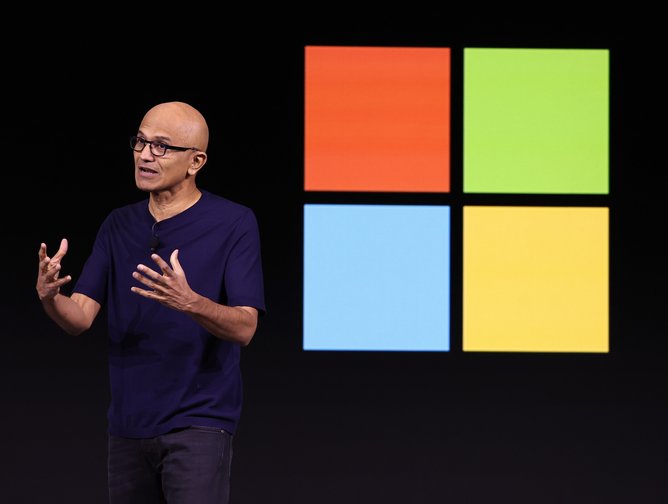
CEO: Satya Nadella
Specialisation: Deploying cloud intelligence, AI/ML models and custom logic securely to edge devices
Under CEO Satya Nadella’s leadership, Microsoft earned recognition as a Leader in the 2025 Gartner Magic Quadrant for Global Industrial IoT Platforms – validation of its position in an increasingly crowded market.
Microsoft’s edge AI solution, Azure IoT Edge, securely deploys cloud intelligence, AI and custom logic to distributed IoT devices at scale.
SGS demonstrates the platform’s practical application through its OCM-Online solution, which provides predictive analysis for wind turbine oil conditions and reduces the risk of unplanned downtime that can cost energy companies significantly in both revenue and maintenance.
The Azure IoT Edge security manager controls access to the hardware root of trust and monitors runtime integrity, facilitating integration with various secure silicon technologies.
Tony Shakib, General Manager of Azure IoT, guides the platform’s security and zero-trust approach for scaled deployments, addressing the genuinely complex challenge of managing security hardening across distributed environments with varying threat profiles.
1. Nvidia Jetson Platform

Company: Nvidia
CEO: Jensen Huang
Specialisation: High-performance platforms accelerating physical AI, robotics and complex vision processing
Nvidia’s Jetson platform provides the hardware and software foundation for physical AI and robotics applications that demand substantial computational muscle.
The Blackwell-powered Jetson Thor is a significant leap forward, delivering 7.5x more AI compute and up to 2,070 FP4 teraflops – which measures the chip’s ability to perform floating-point operations per second.
This computational capacity enables running multiple generative AI models at the edge without requiring cloud connectivity – which matters enormously for applications where latency or connectivity cannot be guaranteed.
Putting the platform into practice, John Deere’s autonomous tractor, which uses the platform, received a CES Best of Innovation award and demonstrates the technology’s real-world capabilities in agricultural settings.
Amazon Robotics and Boston Dynamics are also utilising Jetson Thor for physical AI applications across manufacturing, logistics and healthcare environments.
CEO Jensen Huang guides the platform, which now serves over two million developers working on industrial IoT and security solutions, while Executive of Communications, Nefi Alarcon, assists with leadership communication as the developer community continues driving innovation in autonomous systems that can perceive and respond to their environments.