The AI application market has matured into a US$100bn global industry that is restructuring how businesses operate, how creatives work and how people find information.
What has emerged is not a single dominant business model, but a spectrum of approaches – from lean, profitable operations that challenge venture capital orthodoxy, to enterprise giants extracting premium revenue from user bases.
Some companies burn through billions chasing computational advantages; others achieve comparable results for a fraction of the cost.
Here, AI Magazine examines the companies defining commercial AI today, where the real competitive advantages lie – and what their strategies reveal about where profits will concentrate.
10. Midjourney
Founded: 2022
Employees: 131
CEO: David Holz
Revenue: US$500m

David Holz has built something that defies Silicon Valley convention.
His text-to-image generator charges up to US$120 monthly for unlimited commercially licensed generations – and it turned profitable by August 2022 – without taking a penny of external funding.
Now the CEO is making another counterintuitive move: hiring Ahmad Abbas, formerly of Apple’s Vision Pro team, to develop custom silicon – controlling the entire inference stack while protecting the profit margins that make Midjourney an outlier.
9. Grammarly
Founded: 2009
Employees: 1,317
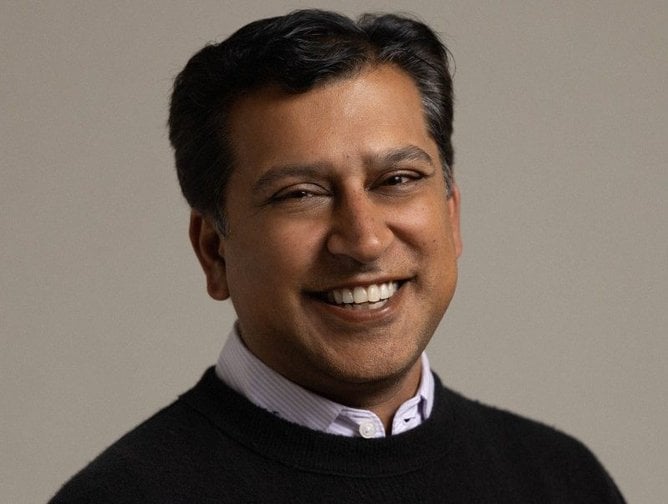
CEO: Shishir Mehrotra
Revenue: US$700m
A study with The Harris Poll found that US companies with 500 employees lose US$6.25m annually to communication breakdowns – 7.5 hours of wasted time per employee each week.
Grammarly has turned this problem into a US$700m revenue stream.
The rebrand to Superhuman Platform Inc. makes the ambition clear – under CEO Shishir Mehrotra, the company is positioning itself as a solution to what it calls “communication inflation” – the flood of messages and documents that buries productivity.
8. Grok
Founded: 2023
Employees: 1,500
CEO: Elon Musk
Revenue: US$300m

Grok is an AI chatbot developed by Elon Musk’s xAI, integrated with the X platform (formerly Twitter), offering real-time information and capabilities like image generation, document summarisation and fact-checking.
The CEO’s message is that AI technology, not the social media platform, drives future growth.
The team behind Grok are now racing towards Grok 5, scheduled for Q1 2026.
Then came Grokipedia in October 2025 – an open-source encyclopedia where users can edit entries but Grok AI holds final editorial authority.
7. Synthesia
Founded: 2017
Employees: 550
CEO: Victor Riparbelli
Revenue: US$100m

Synthesia, the London-based AI video creation platform founded by Victor Riparbelli, enables enterprises to produce high-quality videos featuring AI avatars in over 140 languages – saving up to 80% in time and costs compared to traditional methods.
Synthesia has attracted top investors including Google Ventures and sees widespread adoption by Fortune 100 companies, leveraging “speed with certainty” through automated governance that ensures compliance across video content.
6. Perplexity
Founded: 2022
Employees: 1,600
CEO: Aravind Srinivas
Revenue: US$150m

Aravind Srinivas identified a fundamental problem with early Gen AI: nobody trusted it.
His answer was Perplexity, a citation-based answer engine that processes over 435 million monthly queries and hit US$100m in annualised revenue in 2025.
The user base skews academic — 45% hold at least a bachelor’s degree – and these users spend an average of 22 minutes per session, far longer than typical search behaviour.
What is emerging is a shift in expectations. Traditional search engines return links; Perplexity synthesises answers with visible sources. That distinction is forcing incumbents to rethink their models.
5. DeepSeek
Founded: 2023
Revenue: US$200m
CEO: Liang Wenfeng
Employees: 200

Liang Wenfeng’s AI app DeepSeek has rewritten assumptions about what it costs to build frontier models.
DeepSeek-V3 trained on 14.8 trillion tokens for US$6m, using 2.664 m H800 GPU hours.
Compare that to the estimated US$100m OpenAI spent training GPT-4, or the compute Meta burned through for Llama 3.1 – DeepSeek used one-tenth the power.
Perhaps most significantly, DeepSeek-V3 is available under the permissive MIT License.
If a well-funded Chinese hedge fund can achieve comparable performance at a fraction of the cost, the competitive advantage shifts from who has the biggest GPU cluster to who has the cleverest architecture.
4. Microsoft Copilot
Founded: 2023
Employees: 220,000
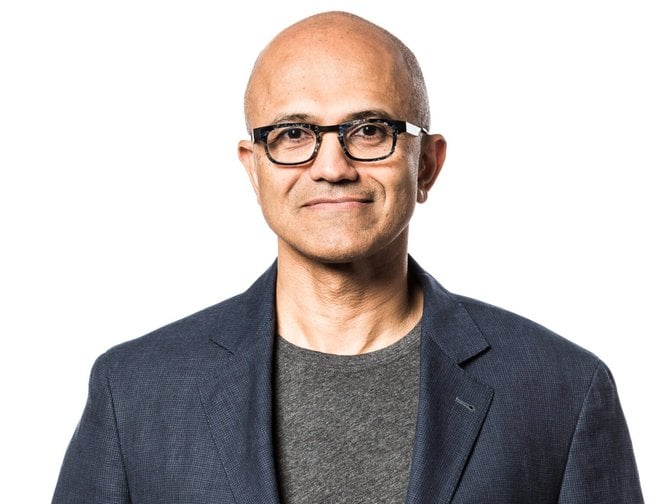
CEO: Satya Nadella
Revenue: US$281.72bn
Microsoft has executed the most commercially successful AI deployment strategy by a considerable margin.
Microsoft Cloud generated US$46.7bn in the quarter ending June 30, 2025, up 27% year-over-year.
Copilot drives premium upselling within Microsoft 365 Commercial products.
From 2024, licensed Windows-compatible keyboards started shipping with dedicated Copilot keys – a physical manifestation of the integration strategy.
CEO Satya Nadella says: “Cloud and AI is the driving force of business transformation across every industry and sector”.
3. Gemini
Founded: 2023
Employees: 183,323
CEO: Sundar Pichai
Revenue: US$385.47bn
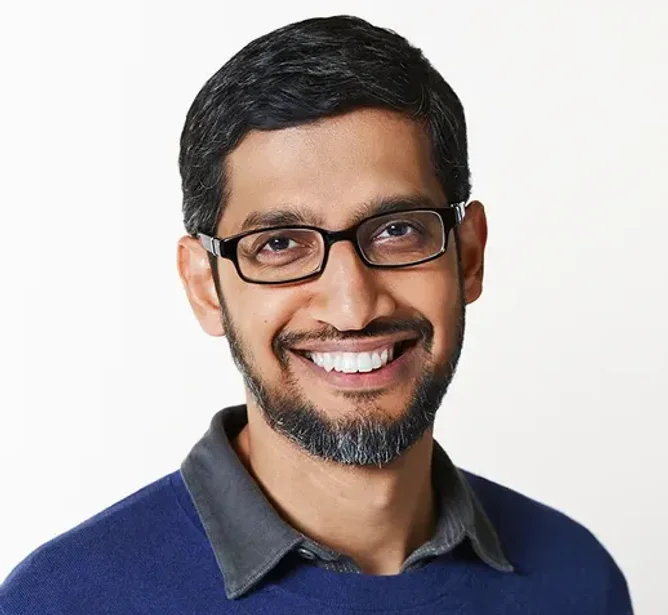
Gemini is a very popular AI application – and now Sundar Pichai has launched Gemini 3.0 – with claims of advances in multimodal understanding, PhD-level reasoning and top position on the LM Arena leaderboard.
But the real story is Antigravity, a developer environment that represents Google’s counteroffensive against Microsoft and OpenAI.
Antigravity enables autonomous agents to build applications from single prompts – creating subtasks, executing them, verifying work inside Chrome.
Google is attempting to move users from static applications to dynamic, AI-generated interfaces that respond to natural language instructions.
2. Claude
Founded: 2021
Employees: 1,300
CEO: Dario Amodei
Revenue: US$5bn
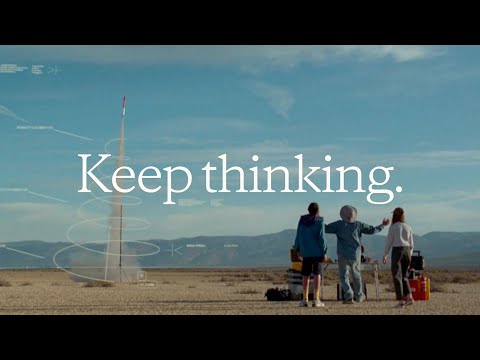
Dario Amodei and six other researchers walked out of OpenAI in 2021 with a thesis: safety and alignment would become a competitive advantage, not just an ethical obligation.
Three years later, Anthropic carries a US$183bn valuation, supported by US$18bn in funding.
The company’s Constitutional AI methodology ensures models remain helpful, honest and harmless. That matters to enterprises and governments concerned about the financial and reputational costs of AI failures. A hallucination that leads to legal exposure or regulatory sanction can cost millions.
Anthropic has positioned Claude as the risk-mitigated choice, capturing market segments where trust outweighs raw performance.
What the CEO understood earlier than most is that institutional buyers will pay a premium for systems they believe won’t mislead them.
1. ChatGPT
Founded: 2022
Employees: 3,531
CEO: Sam Altman
Revenue: US$10bn
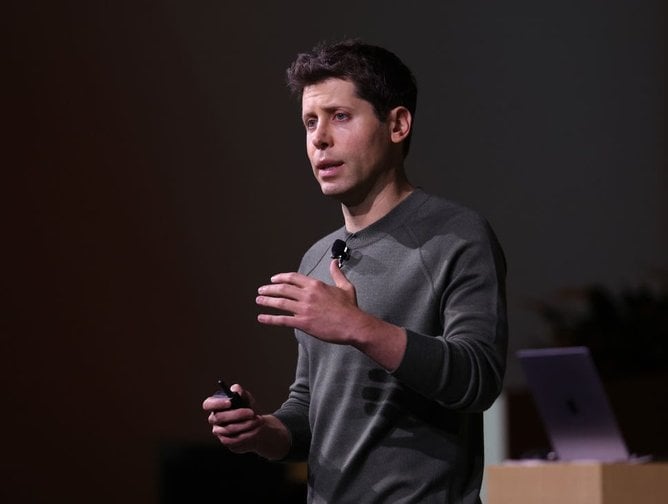
CEO of OpenAI Sam Altman has created a platform that has become synonymous with Gen AI itself – 700 million weekly active users relying on it for everything from complex coding tasks to creative writing, business analysis to research synthesis.
Built on the GPT-5.1 engine, ChatGPT has changed the world – altering how people globally retrieve information to how professionals interact with information and complete knowledge work.
The platform offers text, audio and image generation through GPT-4o – integrating multimodal functionality with verifiable search features that address the trust issues plaguing early Gen AI.
ChatGPT has accelerated enterprise adoption of conversational AI beyond what any competitor managed – proving that frontier models could be deployed commercially at scale whilst remaining genuinely useful.
From legal research to software development, from education to strategic planning, the platform has embedded itself into daily workflows across industries.