The AI industry is crystallising around a handful of leaders whose decisions ripple across global markets.
From the researchers who laid the theoretical groundwork decades ago to the entrepreneurs building today’s commercial platforms, these individuals lead the direction of one of technology’s most transformative sectors.
Their influence extends beyond their companies to shaping regulatory discussions, investment flows and public perception of AI’s potential and risks.
While some wield power through breakthrough research that becomes tomorrow’s products, others command the resources and vision to turn abstract possibilities into tools used by millions.
Together, they represent the concentrated influence that defines how humanity’s relationship with AI will unfold.
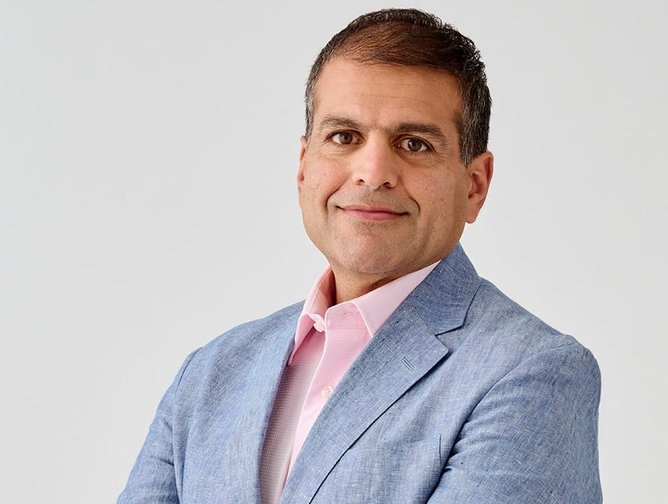
10. Chris Bedi
Company: AI Transformation
Revenue: US$10.98bn
Employees: 26,293
CEO: Bill McDermott
Founded: 2004
As Chief Customer Officer and Special Advisor to the Chairman for AI Transformation, Chris is dedicated to helping customers harness the power of AI. He served as ServiceNow’s CDIO from 2015 to 2024, leading its AI journey.
Today, his focus is on guiding customers through their AI and Gen AI implementations and creating faster time to value.
An industry thought leader on practical AI/ML adoption in the enterprise, Chris works closely with many of the world’s leading CIOs to address key industry issues.
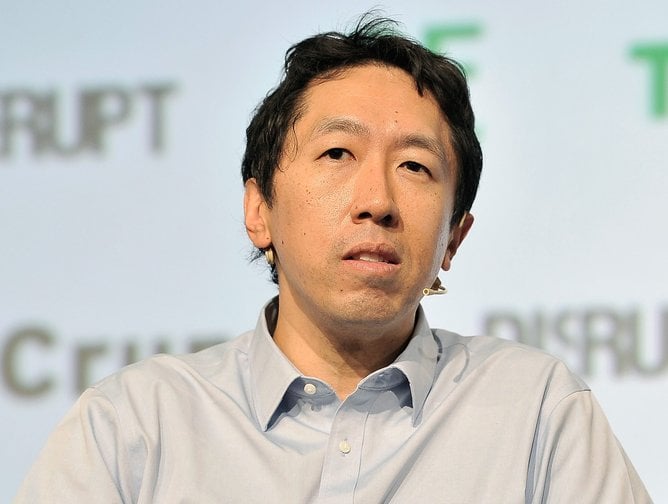
9. Andrew Ng
Company: LandingAI
Revenue: US$19.3m
Employees: 112
CEO: Dan Maloney
Founded: 2017
While Dan Maloney is the CEO of LandingAI, Andrew is the founder.
Andrew’s career spans both academia and industry, from co-founding Google Brain to serving as Baidu’s Chief Scientist.
Through Coursera, he has educated millions in AI concepts, democratising access to machine learning (ML) knowledge.
His current focus on “agentic workflows” at LandingAI targets manufacturing applications, proving that AI deployment extends beyond consumer applications into industrial processes.
Today, his vision of AI agents represents the next evolution beyond today’s chatbots.
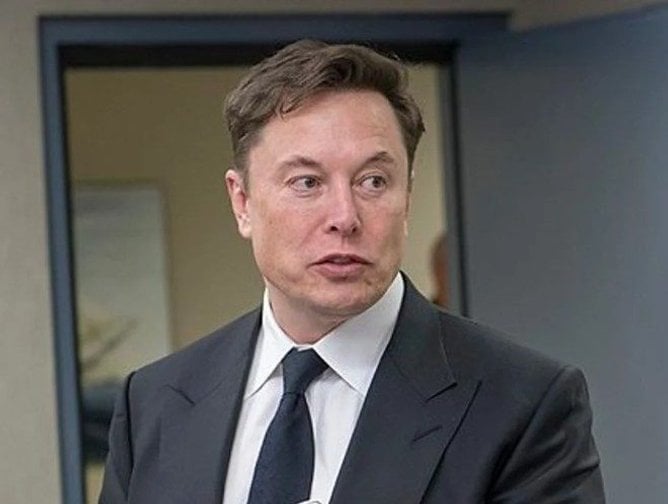
8. Elon Musk
Company: xAI
Revenue: US$500m
Employees: 1,200
CEO: Elon Musk
Founded: 2023
Elon’s entry into AI through xAI represents his attempt to create a “truth-seeking” alternative to existing large language models (LLMs).
As a co-founder of OpenAI, he now invests in AI across other companies he owns such as Tesla and SpaceX.
From developing the Neuralink which develops brain-computer interfaces using advanced AI to providing unique training data with X, his influence resonates across multiple markets.
xAI’s USUS$6bn fundraising demonstrates investor confidence in his track record, though xAI faces intense competition from established players with multi-year head starts.
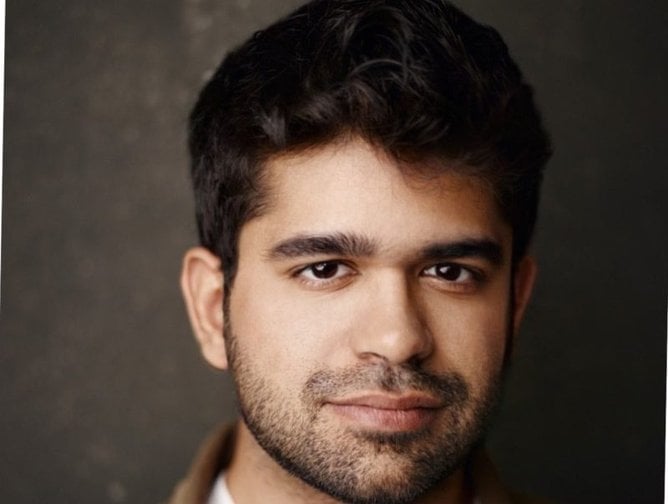
7. Aravind Srinivas
Company: Perplexity
Revenue: US$148M
Employees: 1,222
CEO: Aravind Srinivas
Founded: 2022
Perplexity’s fast funding growth from zero to USUS$1.22bn demonstrates investor appetite for alternatives to ChatGPT.
Perplexity stands out as its conversational search engine provides cited answers, addressing concerns about AI hallucination and misinformation.
Aravind embodies the new generation of AI entrepreneurs by challenging established players with focused applications.
His former OpenAI background also gives him insider knowledge of LLM development.
6. Yann LeCun

Company: Meta
Revenue: US$47.5bn
Employees: 75,945
CEO: Mark Zuckerberg
Founded: 2004
Yann’s convolutional neural networks revolutionised image recognition and earned him the Turing Award (Nobel Prize of Computing).
At Meta, he shapes AI strategy for platforms used by billions while publicly challenging apocalyptic AI predictions.
His work at AT&T Bell Labs demonstrated commercial viability by processing 10% of US bank cheques by 1998, proving AI’s business applications decades before the current boom.
Furthermore, his contrarian stance on AI safety puts him at odds with other industry leaders.
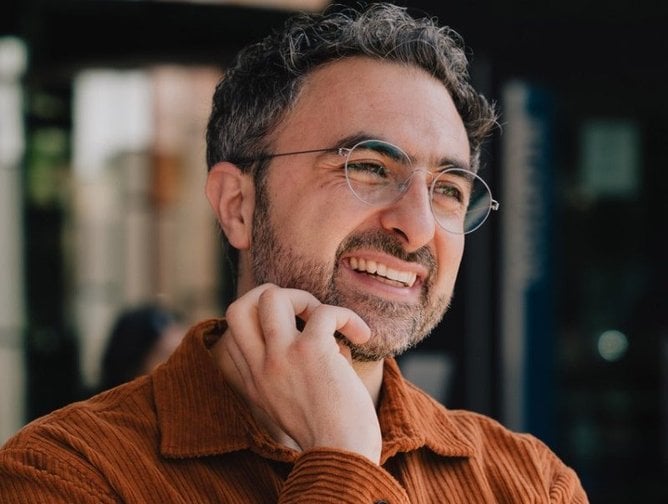
5. Mustafa Suleyman
Company: Microsoft AI
Revenue: US$76.4bn
Employees: 228,000
CEO: Mustafa Suleyman
Founded: 2016
Mustafa’s move from DeepMind to Microsoft signals the industry’s talent wars as tech giants recruit top researchers.
His focus on “AI for people” through Microsoft Copilot also mirrors the shift from research to consumer applications.
His warnings about “psychosis risk” – where users might believe AI systems are conscious – highlight the psychological challenges beyond technical considerations that he addresses.
Mustafa’s experience building DeepMind gives him unique insight into scaling AI organisations and managing commercial transitions.
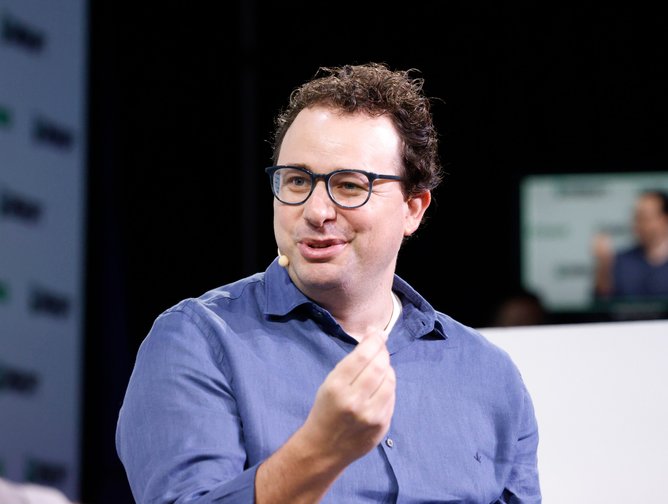
4. Dario Amodei
Company: Anthropic
Revenue: US$4bn
Employees: 1,097
CEO: Dario Amodei
Founded: 2021
Dario’s departure from OpenAI to found Anthropic created one of the industry’s most credible alternatives to ChatGPT.
His focus on AI safety and alignment attracted USUS$27.3bn in funding, demonstrating that safety-focused development can command premium valuations.
Anthropic’s constitutional AI approach is a different philosophy about AI development focusing on what is ethical.
Dario’s research background also provides technical credibility for safety claims, making him a key voice in responsible AI development discussions.
3. Demis Hassabis
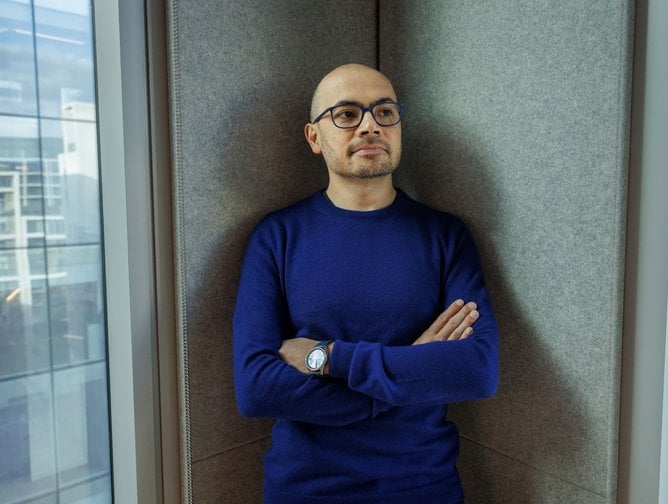
Company: Google DeepMind
Revenue: N/A
Employees: 2,125
CEO: Demis Hassabis
Founded: 2010
Building DeepMind into Google’s AI research, Demis has created a powerhouse through breakthrough achievements like AlphaGo and AlphaFold.
The 2023 merger of DeepMind with Google Brain consolidated Alphabet’s AI efforts under his leadership, creating a research organisation capable of competing with OpenAI.
His neuroscience background and game design experience inform DeepMind’s approach to general intelligence, while Google’s resources provide the computational infrastructure needed for large-scale experiments.
2. Jensen Huang
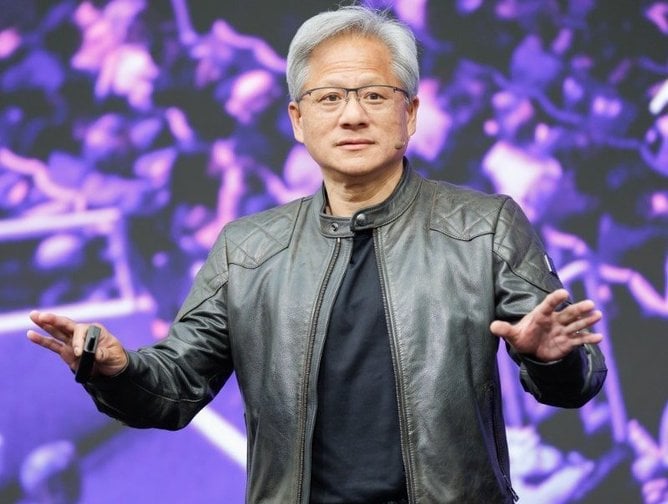
Company: Nvidia
Revenue: US$130.5bn
Employees: 36,000
CEO: Jensen Huang
Founded: 1993
Jensen transformed Nvidia from a graphics company into the AI industry’s infrastructure provider – through the strategic development of CUDA parallel computing platforms – a decision that would prove prescient when deep learning emerged decades later.
His early bet on enabling GPUs for general-purpose computing seemed like a risky diversification from gaming hardware, but it positioned Nvidia perfectly for the AI boom.
Today, his company’s GPUs have become the new oil powering AI development, with virtually every major AI breakthrough depending on Nvidia’s hardware architecture.
This positioning has made Nvidia one of the world’s most valuable companies, with its market capitalisation rivaling entire countries’ GDPs.
Jensen’s influence extends beyond hardware sales with his technical decisions about GPU architecture, memory systems and software platforms determine what AI applications become feasible for the entire industry.
The symbiotic relationship between AI software ambitions and Nvidia’s hardware capabilities creates a feedback loop where new AI possibilities drive demand for more powerful chips, which in turn enable even more ambitious AI projects.
1. Sam Altman

Company: OpenAI
Revenue: US$12bn
Employees: 2,659
CEO: Sam Altman
Founded: 2015
As the leader of OpenAI, Sam is one of AI’s pioneers, transforming AI from research curiosity to mainstream technology through ChatGPT’s public release.
His transition from Y Combinator president to AI evangelist positioned him as the public face of the artificial general intelligence (AGI) movement, while his fundraising success – including a USUS$40bn Series F round in March 2025 – demonstrates the capital requirements for frontier AI development.
His influence operates through both technical advancement and public narrative, creating market demand for AI applications while securing the funding needed to build them.
Sam’s vision of AI creating new career paths, including speculation about graduates working in space, shows the evolving scope he envisions for the technology.
The symbiotic relationship between his market-making vision and Nvidia CEO Jensen Huang’s hardware infrastructure defines the current AI ecosystem – where software ambitions drive hardware demand in an unprecedented cycle of technological and financial innovation.