Silicon Valley might dominate the AI headlines, but Europe’s been quietly building something different and practical.
While many American tech giants chase artificial general intelligence (AGI) with escalating budgets and increasingly dramatic press releases, European firms are also focusing on business problems.
From London’s Gen AI startups to Germany’s industrial automation specialists, this ecosystem has turned what others see as constraints into competitive advantages.
With the EU AI Act setting global standards and European venture capital reaching record levels, these companies show Europeans different approaches.
10: Celonis
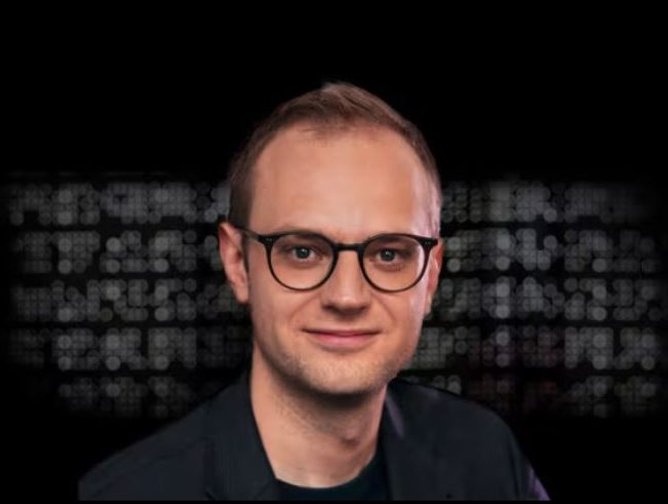
CEO: Alexander Rinke (Co-Founder and Co-CEO)
HQ location: Munich, Germany
Specialisation: Process Mining and Process Intelligence
Celonis essentially invented its own market.
Its specialisation in Process Intelligence makes things simple by digging through a company’s existing systems to find money that’s being wasted without the company realising.
An example of Celonis’ success is when Accenture cut its request-to-order cycles in half.
Other clients discovered they were carrying 66% excess inventory.
Investors recognised that eventually every CFO asks the same question of where budgets are disappearing to.
As a result, Co-CEO Alexander Rinke has built something rare in enterprise software – a product that delivers transparent, measurable ROI rather than vague promises about “transformation.”
9: ElevenLabs
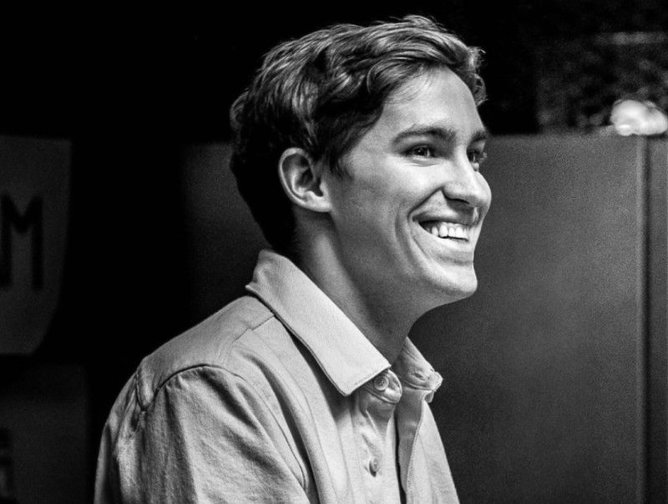
CEO: Mati Staniszewski (Co-Founder)
HQ location: London, UK
Specialisation: High-Fidelity AI Voice Synthesis and Audio Generation
Going from founding to unicorn status in just two years is fairly ridiculous, ElevenLabs has earned its place in the European AI market.
Co-founder Mati Staniszewski’s team cracked a challenge: 75ms latency with its Flash Model, which is fast enough that conversations feel real-time rather than robotic.
Over 60% of Fortune 500 employees are already using it.
What’s particularly clever though is the Voice Library marketplace.
While competitors are getting tangled in messy copyright lawsuits, ElevenLabs built an ethical framework first – they’ve already paid out US$2m to creators who license its voices.
That US$180m Series C confirmed what was becoming clear: audio is one of the next frontiers.
8: Synthesia

CEO: Victor Riparbelli (Co-founder)
HQ location: London, UK
Specialisation: AI Video Generation and Digital Avatars
Corporate training videos are expensive to produce and challenging to scale.
Co-founder Victor Riparbelli spotted a gap that many leaders seemed to be missing: a business problem with budgets attached.
The results allowed BSH Home Appliances to achieve 70% efficiency gains across 60,000 employees, while Zoom slashed production time by 90%.
IU University also compressed course creation from literal months down to two weeks – and Avetta boosted agent productivity by 20% just in time-to-proficiency.
This is infrastructure for corporate knowledge transfer.
Victor understood that L&D departments have real budgets and measurable pain points. They don’t need experimental features, but proven ROI.
7: DeepL
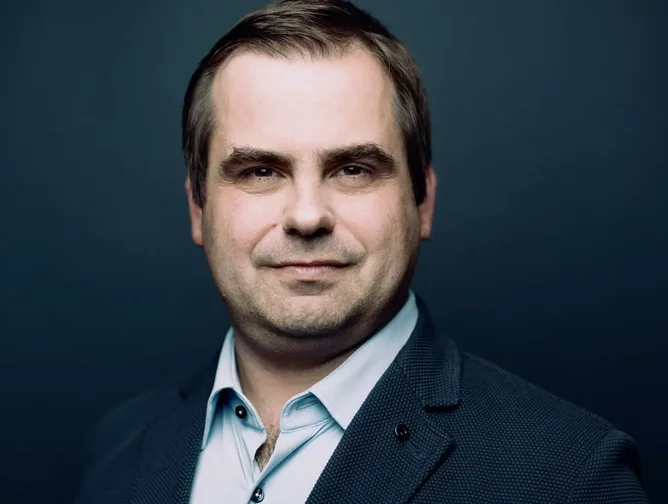
CEO: Jaroslaw (Jarek) Kutylowski (Founder and CEO)
HQ location: Cologne, Germany
Specialisation: Neural Machine Translation and Language Intelligence
Translation sounds straightforward until a law firm is handling cross-border litigation or a pharmaceutical company navigating regulatory requirements across multiple jurisdictions.
Suddenly, accuracy is existential.
Founder Jaroslaw Kutylowski built DeepL on this insight.
When translation errors can derail legal cases or cost millions in regulatory fines, companies need precision – that’s why firms like Japanese legal giant Nagashima Ohno & Tsunematsu trust DeepL with sensitive legal documents.
Why Nature House saw engagement climb and costs drop after implementing the API – and Kutylowski’s bet on human-guided training over brute-force approaches has clearly paid off.
DeepL now serves 200,000 businesses and governments that simply cannot afford mistakes.
6: Darktrace
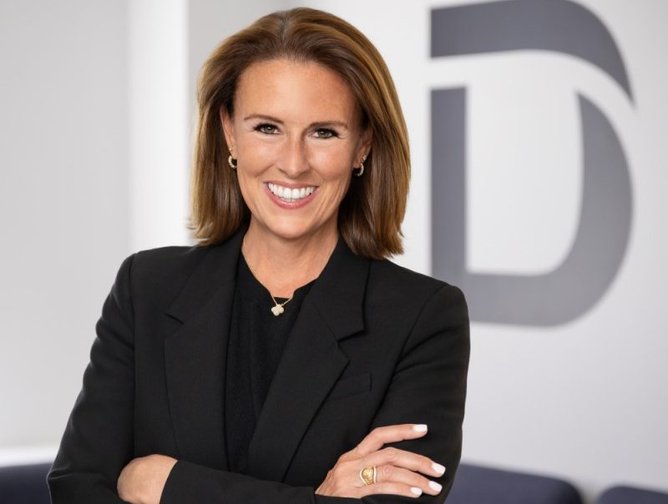
CEO: Jill Popelka
HQ location: Cambridge, UK
Specialisation: Autonomous Cyber Security AI and Threat Detection
AI-powered cyberattacks are multiplying faster than security teams can possibly hire analysts.
It’s asymmetric, because one AI can probe millions of vulnerabilities while human defenders face alert fatigue.
As CEO, Jill Popelka’s approach is essentially fighting AI with AI.
Darktrace’s ActiveAI Security Platform learns each organisation’s unique behavioral patterns, then spots anomalies in real-time.
The staffing crisis is stark, because 62% of security leaders openly admit they lack sufficient personnel to manage traditional tools.
Jill’s Proactive Exposure Management adds proper financial rigor too, calculating actual patching ROI by weighing exploit risks against engineering time.
Under her leadership, cybersecurity is shifting from compliance checkbox to strategic necessity.
5: ASML
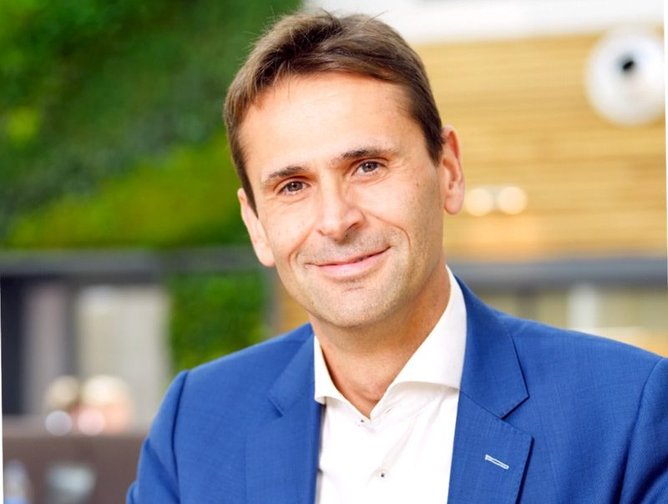
CEO: Christophe Fouquet
HQ location: Veldhoven, Netherlands
Specialisation: AI-Optimised EUV Lithography and Manufacturing Automation
ASML controls a big share of the global lithography market, which makes it the single most critical bottleneck in semiconductor manufacturing.
Every advanced chip powering AI models – from DeepMind’s Nobel-winning research to Mistral’s language models – fundamentally depends on ASML’s extreme ultraviolet lithography machines.
CEO Christophe Fouquet, who stepped up in April 2024, doesn’t sell AI products, but uses AI to supercharge ASML’s own engineering processes.
Its collaboration with Google Cloud cut product development cycles from monthly to biweekly, boosted efficiency by 40% – and collapsed encryption testing from hours to just 10 minutes.
Christophe is projecting a huge spike in sales largely riding AI chip demand.
The Dutch giant is a big player in the physical infrastructure making AI possible.
4: Stability AI
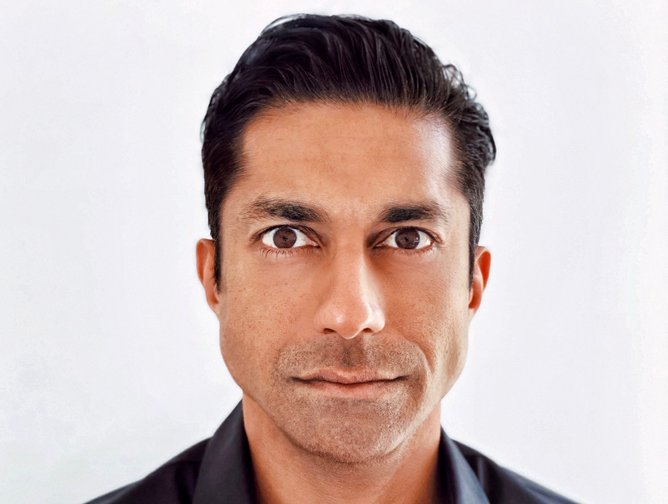
CEO: Prem Akkaraju
HQ location: London, UK
Specialisation: Gen AI for Text-to-Image, Video and Audio
Stability AI pioneered accessible Gen AI with Stable Diffusion, democratising text-to-image, video – and audio generation for developers and enterprises alike.
The London-based company’s open-source approach sparked a creative revolution – Mercado Libre achieved 25% growth in ad click-through rates using their technology.
CEO Prem Akkaraju, who took over in June 2024 after founder Emad Mostaque’s departure, is steering the company toward commercial sustainability while maintaining its open-source DNA.
With Sean Parker as Executive Chairman, Stability AI is balancing accessibility with profitability, offering both community models and enterprise solutions.
Its technology powers everything from advertising to design workflows, proving that open innovation can drive serious business results.
3: Mistral
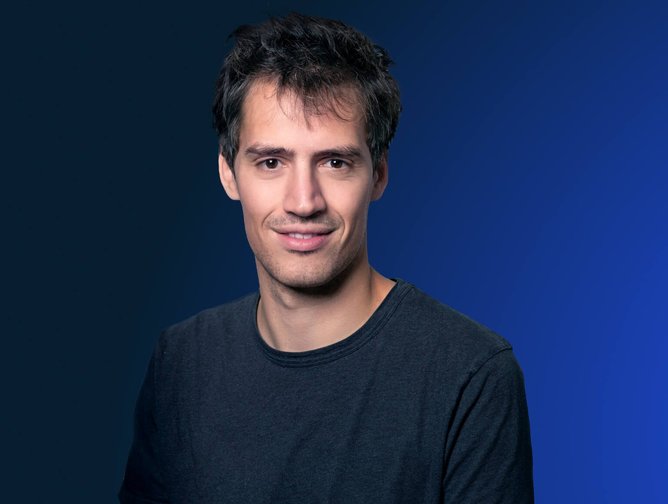
CEO: Arthur Mensch (Co-Founder)
HQ location: Paris, France
Specialisation: Open-Weight Large Language Models (LLMs) and Developer Platform
Co-founder Arthur Mensch is building AI models alongside Guillaume Lample and Timothée Lacroix and carrying Europe’s digital sovereignty ambitions.
Mistral’s strategy is deliberately simple: small, efficient and open-weight models.
It’s targeting developers who need customisable intelligence they can deploy privately, without routing sensitive data through American cloud providers.
Arthur’s regulatory positioning is pushing compliance requirements to the application layer while keeping foundational models unshackled.
It’s a stance clearly designed to influence EU AI Act implementation while building commercially viable alternatives to US hyperscalers.
2: SAP
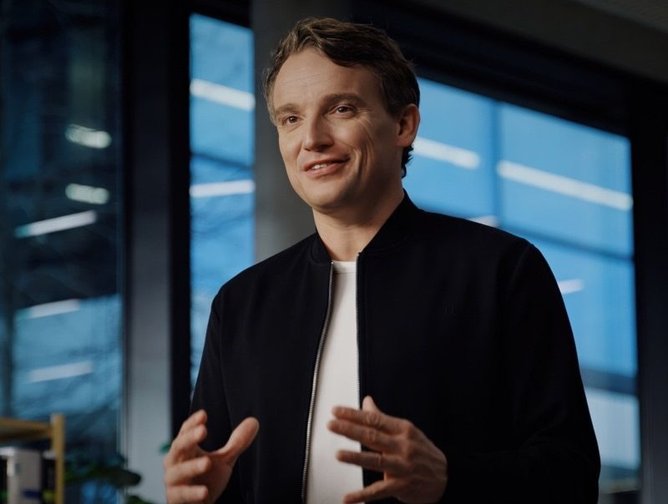
CEO: Christian Klein
HQ location: Walldorf, Germany
Specialisation: Enterprise AI and Intelligent ERP Integration
CEO Christian Klein has led its top tool SAP’s Joule copilot to automate invoice matching and HR address changes.
WEL Networks uses it for asset scheduling, Döhler for policy lookups and AGILITA AG to eliminate tedious manual searches.
Christian frames AI as dependable utility rather than revolutionary magic.
Once AI thoroughly embeds itself inside an ERP system, migration becomes complex and expensive.
Christains’s emphasis on “balancing innovation, human intuition and the realities of global business” is the complete antithesis of move-fast-break-things ideology.
It’s also how to build genuinely defensible B2B moats.
European industry runs on SAP, now it runs on SAP powered by practical, integrated AI.
1: Google DeepMind

CEO: Sir Demis Hassabis
HQ location: London, UK
Specialisation: AGI and Foundational AI Research
AlphaGo sized global headlines by defeating humanity’s best Go player back in 2016.
But AlphaFold earned Sir Demis Hassabis a Nobel Prize in Chemistry in 2024 for solving protein structure prediction – properly validating his decade-long bet on fusing reinforcement learning with neuroscience insights.
That’s the DeepMind paradox in a nutshell: founded in London in 2010, acquired by Google for a record-breaking European sum in 2014, now operating as Alphabet’s AGI research engine while maintaining European legal domicile.
It’s simultaneously academic and commercial, pure research and profit-driven.
Demis has consistently demonstrated that patient, methodical research yields genuine breakthrough discoveries.
As a result, DeepMind proves Europe can absolutely compete at AI’s highest levels.