As AI demands surge in 2025, businesses worldwide face mounting pressure to unify data from cloud environments, on-premises servers and real-time streams.
As a result, AI data integration platforms have become essential infrastructure – wielding machine learning (ML) for intelligent data cleansing, anomaly detection and vector preparation.
These solutions can slash integration times by up to 70% in hybrid environments, while Fortune 500 companies increasingly rely on them to maintain compliance, achieve scale and extract actionable insights from complex data estates.
10. SnapLogic

Company: SnapLogic
CEO: Brad Stewart
Specialises in: Low-code AI pipeline creation
SnapLogic’s cloud-native iPaaS platform, enhanced by SnapGPT, enables AI-assisted integration through metadata-aware pipelines that handle hybrid real-time, batch and streaming use cases with equal facility.
The platform’s low-code approach democratises integration, enabling business users and citizen developers to participate in data pipeline creation.
Visual low-code tools make complex integrations accessible, while OpenLineage support ensures transparency and governance.
9. Fivetran

Company: Fivetran
CEO: George Fraser
Specialises in: Automated cloud ETL pipelines
Fivetran automates data ingestion to cloud warehouses using AI-powered schema evolution and real-time synchronisation, proving ideal for complex infrastructures that handle high data volumes effortlessly.
The platform’s core promise – zero-maintenance ELT – resonates strongly with engineering teams tired of brittle, high-maintenance integrations.
The platform delivers 150+ pre-built connectors that eliminate custom integration work, with schema handling that automatically adapts to source system changes.
8. Matillion

Company: Matillion
CEO: Matthew Scullion
Specialises in: Cloud ELT transformations
Matillion supports low-code ELT directly within cloud data warehouses like Snowflake, applying AI query generation capabilities to dramatically slash ETL development times in modern data stacks.
This warehouse-native approach delivers performance advantages by pushing transformations down to where the data resides.
Change data capture and orchestration features are particularly strong, enabling sophisticated workflows with minimal coding requirements.
7. Talend

Company: Talend (Qlik)
CEO: Christal Bemont
Specialises in: Open-source enterprise integration
Now operating under Qlik’s ownership, Talend offers AI-infused ETL capabilities for data preparation, quality management and cloud-hybrid integration, streamlining complex transformations from diverse sources with notable efficiency.
The platform’s open-source heritage provides flexibility that enterprises value, particularly those concerned about vendor lock-in.
The acquisition of Stitch has expanded Talend’s connector library to more than 1,000 integrations, delivering remarkable versatility.
6. Informatica Intelligent Data Management Cloud

Company: Informatica
CEO: Amit Walia
Specialises in: AI-powered data cleansing and integration
Informatica’s platform breadth is impressive – a major bank unified customer data across multiple platforms, cutting processing time by 40% while enhancing compliance through CLAIRE AI’s predictive capabilities that proactively spot data quality issues before they cascade into larger problems.
Informatica’s Intelligent Data Management Cloud leads the market in AI-driven ETL, quality management and governance for both structured and unstructured data, serving over 5,000 customers with sophisticated automated pipelines.
The comprehensive offering covers data cataloguing, masking, integration and more, providing end-to-end data management capabilities.
5. Salesforce MuleSoft Anypoint Platform
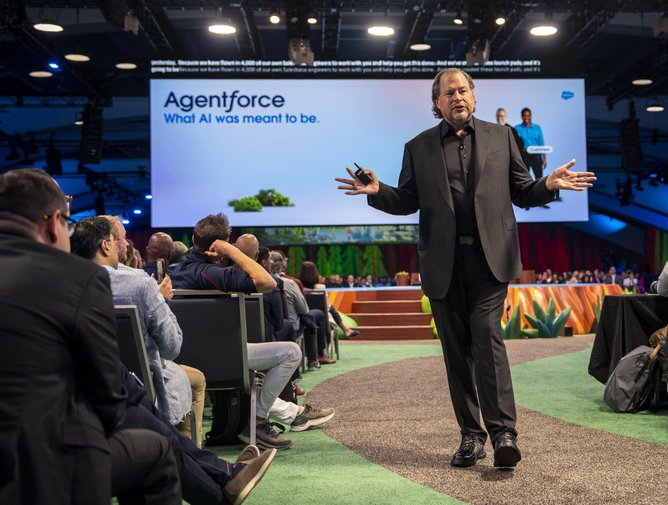
Company: Salesforce
CEO: Marc Benioff
Specialises in: API-led enterprise connectivity
Salesforce’s MuleSoft Anypoint Platform employs AI for sophisticated API orchestration and composable data flows, enabling the adaptable architectures that modern enterprises require.
The platform unifies disparate systems rapidly through an API-first approach that’s become increasingly critical as organisations embrace microservices and distributed architectures.
Anypoint Exchange provides a rich library of reusable APIs enhanced by Einstein AI capabilities.
The platform integrates deeply with Salesforce’s broader ecosystem, supporting comprehensive customer data strategies at scale across industries from financial services to retail – helping organisations break down data silos and accelerate their digital transformation initiatives.
4. Oracle Data Integration Platform

Company: Oracle
Co-CEOs: Clay Magouyrk and Mike Sicilia
Specialises in: Multi-cloud synchronisation
Oracle’s Data Integration Platform harnesses AI to achieve data harmony across hybrid and multi-cloud environments, with particular emphasis on real-time synchronisation capabilities.
The platform can cut integration cycles by 30% through intelligent automation workflows that reduce manual intervention.
Direct connectivity to Oracle’s Autonomous Database provides performance advantages for Oracle-centric organisations, while AI-powered replication handles high transaction volumes and the architecture scales massively to meet enterprise demands.
Clay Magouyrk and Mike Sicilia assumed co-CEO responsibilities in 2025, with Clay bringing deep cloud infrastructure expertise and Mike contributing extensive experience in vertical applications and applied AI.
3. IBM DataStage

Company: IBM
CEO: Arvind Krishna
Specialises in: Hybrid ETL with Watson AI
IBM DataStage sits within the broader Watsonx ecosystem, providing governance-focused integration enhanced by Watson AI for intelligent mapping across cloud and on-premises environments.
The platform handles both batch and streaming workloads reliably at enterprise scale, with particular strength in regulated industries requiring rigorous compliance.
Key features include comprehensive lineage tracking for regulatory compliance, AI-powered automation that accelerates integration workflows and the hybrid flexibility that enterprises with complex legacy estates demand for their digital transformation journeys.
2. Google Cloud Dataflow

Company: Google (Alphabet)
CEO: Sundar Pichai
Specialises in: Unified streaming and batch processing
Built on Apache Beam, Google Cloud Dataflow delivers AI-enhanced, event-driven pipelines that integrate seamlessly with Vertex AI for scalable real-time processing.
The platform handles both batch and streaming data at exabyte levels, making it particularly attractive to hyperscale operations.
Major e-commerce firms leverage Dataflow to ingest and transform massive datasets into BigQuery, powering real-time personalised recommendations that significantly boost customer engagement and unlock deeper insights.
The serverless execution model eliminates infrastructure management overhead, while auto-scaling ensures resources match demand.
Strong developer tools and seamless integration with Google’s analytics ecosystem make it a compelling choice for organisations invested in the Google Cloud platform.
1. Microsoft Azure Data Factory

Company: Microsoft
CEO: Satya Nadella
Specialises in: Hybrid ETL and orchestration
Microsoft’s Azure Data Factory powers enterprise data orchestration through deep integration with Synapse Analytics, excelling particularly within Azure ecosystems.
The platform handles batch, streaming and hybrid pipelines at massive scale – making it a go-to choice for organisations committed to the Microsoft stack.
Smart Data automated ETL for a confidential client, ingesting data from Excel, SQL Server, Oracle and Azure into SQL databases using Logic Apps alerts and Key Vault security – replacing manual processes, dramatically cutting development time and ensuring team-wide consistency.
The platform’s Mapping Data Flows enable sophisticated transformations, while auto-scaling capabilities optimise efficiency and Purview integration ensures robust governance across the data estate.