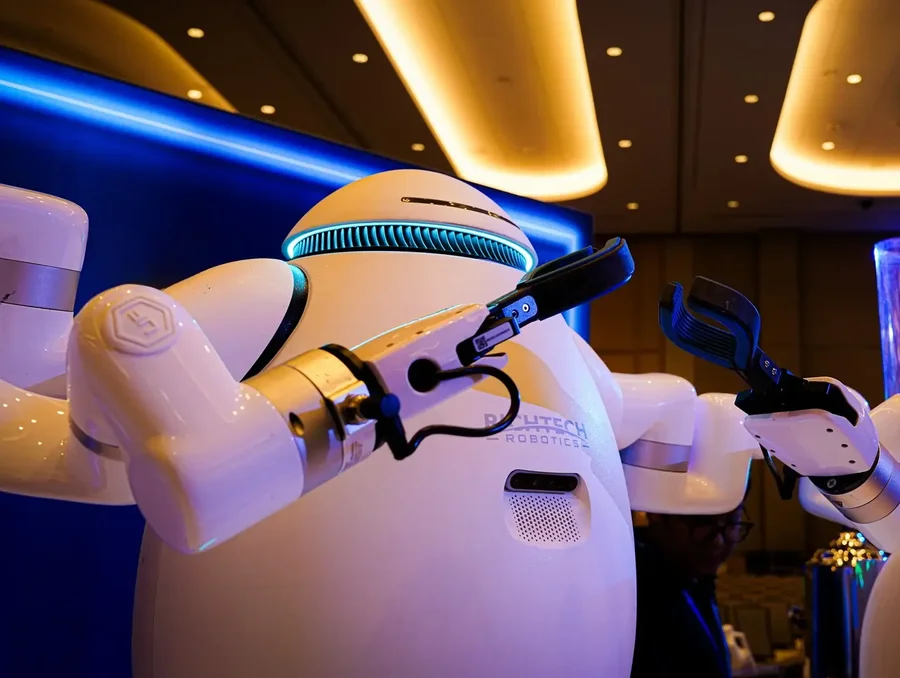
Advanced AI systems in humanoid robots face technological barriers that could prevent widespread adoption, according to research from Gartner, which predicts fewer than 20 companies will successfully scale these solutions by 2028.
The intersection of AI and robotics has created significant excitement in supply chain operations, yet the reality could fall short of expectations. Gartner’s latest predictions suggest AI-powered humanoid robots will struggle to move beyond pilot programmes, highlighting a gap between AI innovation and practical deployment.
As businesses invest heavily in AI technologies to address labour shortages and operational inefficiencies, the consulting giant warns that fewer than 100 companies will progress humanoid robot proof-of-concept programmes, with fewer than 20 achieving live production by 2028.
The promise of AI-enabled robotics
Humanoid robots represent a convergence of multiple AI technologies, including machine learning algorithms, computer vision and adaptive decision-making systems. These robots incorporate advanced sensors for spatial awareness, allowing them to navigate warehouse environments while processing real-time data.
The appeal for supply chain leaders centres on AI’s potential to address workforce challenges, including labour gaps, skills gaps and rising costs. The technology promises versatility through machine learning, enabling robots to learn and adapt to multiple tasks without extensive reprogramming.
However, according to Gartner, the hype surrounding AI-powered humanoid robots outweighs their current readiness for large-scale deployment.
“The promise of humanoid robots is compelling, but the reality is that the technology remains immature and far from meeting expectations for versatility and cost-effectiveness,” says Abdil Tunca, Senior Principal Analyst in Gartner’s Supply Chain practice.

AI limitations in physical robotics
While AI has demonstrated remarkable capabilities in software applications, translating these capabilities into physical robotics presents distinct challenges. Current AI models embedded in humanoid robots cannot meet the complex needs of high-demand warehouses, lacking sufficient dexterity, intelligence and adaptability.
The technological limitations extend beyond hardware constraints. AI systems in humanoid robots face integration complexity, as many cannot form compatibility with existing workflows and enterprise systems.
Energy constraints pose another significant challenge, as AI processing demands significant battery life, limiting operational time. This affects the practical viability of deploying humanoid robots in continuous warehouse operations.
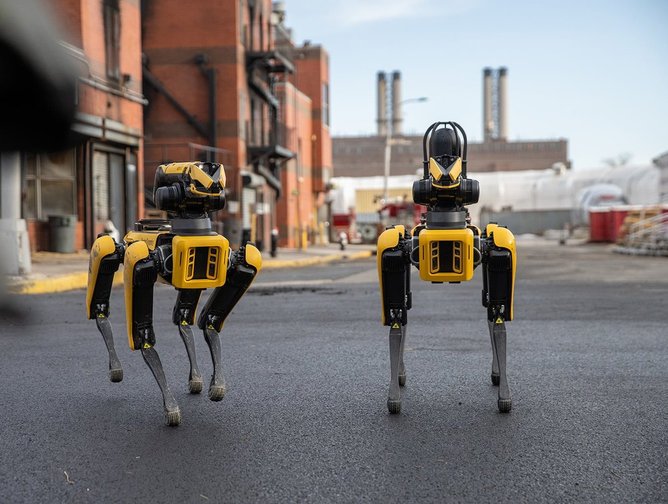
Gartner identifies several barriers preventing AI-enabled humanoid robots from achieving widespread adoption:
- Technological limitations prevent AI systems from handling complex warehouse operations
- Integration complexity with existing workflows and enterprise systems
- High costs, including AI development, training and ongoing maintenance without proven returns
- Energy constraints, as AI processing demands significant battery life, limit operational time
Rethinking AI investment strategies
Polyfunctional robots represent a different approach to AI implementation in supply chains. Rather than attempting to replicate human form and intelligence, these systems use AI for specific tasks such as navigation, object recognition and inventory management.
With wheels instead of legs and telescopic arms optimised for warehouse tasks, they can move boxes, pick cases, scan inventory and perform inspections more efficiently than humanoid counterparts. The AI systems in polyfunctional robots focus on specialised functions rather than general intelligence, potentially offering better performance-per-dollar invested.
“For the majority of companies that will need to prioritise robots that maximise throughput-per-dollar invested, we expect polyfunctional robots to be the superior solution,” says Caleb Thomson, senior director analyst in Gartner’s Supply Chain practice.

For AI executives and technology leaders, Gartner’s findings suggest a need for strategic thinking about AI investments in physical automation.
The research firm recommends pursuing pilot programmes to validate AI capabilities before scaling, collaborating with emerging providers to align AI solutions with operational needs and implementing continuous monitoring to track AI performance.
Gartner adds that supply chain leaders should target specific bottlenecks where AI can deliver measurable value and prioritise outcome-driven automation rather than pursuing generalised AI strategies.
The research highlights that, while AI continues to advance rapidly in many domains, its application in humanoid robotics for supply chain operations faces significant hurdles. The gap between AI’s theoretical capabilities and practical deployment could mean that more specialised, focused AI applications deliver better results for businesses seeking to enhance supply chain efficiency.