When a global consumer goods giant embarks on a journey of digital independence, the challenge extends far beyond traditional IT migration.
The Magnum Ice Cream Company (TMICC) has entered into a multi-year partnership with HCLTech, demonstrating how AI-driven infrastructure can reshape enterprise operations for organisations managing complex, global digital ecosystems.
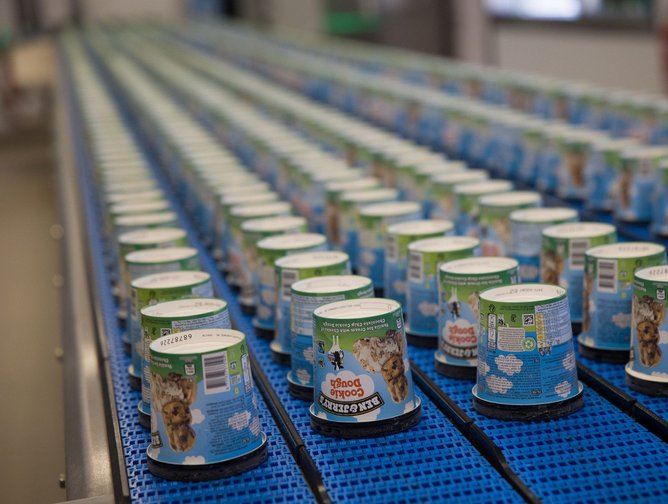
Following its separation from Unilever in July 2025, TMICC – which manages brands including Magnum, Ben & Jerry’s, Wall’s and Cornetto – is building a greenfield IT infrastructure powered by AI and agentic solutions.
The partnership with HCLTech represents a shift from reactive IT management to autonomous operations, offering insights for AI executives navigating similar transformations.
“As The Magnum Ice Cream Company advances as an independent listed ice cream company, we are infusing intelligence into every layer of our digital foundation,” says Mark O’Brien, CTO at TMICC.

“Our partnership with HCLTech is instrumental in building a secure, future-ready infrastructure. Together, we are unlocking advanced AI capabilities that will redefine operational excellence and elevate the experiences we deliver.”
Building autonomous operations with agentic AI
The deployment of HCLTech’s AI Force platform across TMICC’s entire digital infrastructure represents an evolution towards fully autonomous IT operations.
The platform integrates predictive analytics to deliver scalable, resilient operations across global markets, addressing the complexity inherent in managing enterprise-scale digital transformation.
Zero-touch automation sits at the centre of this approach. HCLTech is overseeing the transition from AIOps to a NoOps operating model, incorporating agentic solutions designed to enable autonomous operation.
This progression could offer a framework for organisations seeking to reduce manual intervention while maintaining operational resilience. For AI executives, the implications extend beyond operational efficiency.
The partnership demonstrates how agentic AI could be deployed to manage complex infrastructure transitions, including the navigation of Transition Service Agreements (TSAs) following corporate separation.
Scaling AI across global infrastructure
C. Vijayakumar, CEO & Managing Director of HCLTech, says the partnership reinforces HCLTech’s leadership in “driving complex, global transformations backed by deep domain expertise”.
He adds: “We look forward to contributing to TMICC’s growth vision and strategy with the best of technology and global talent.”

The integration of predictive analytics into TMICC’s infrastructure aims to improve user experience while delivering operational resilience. For an organisation that banked €7.9bn (US$8.3bn) in revenue in 2024, the stakes for maintaining continuous operations during digital transformation could not be higher.
The CPG sector presents unique challenges for AI deployment, including managing global supply chains, seasonal demand fluctuations and diverse market requirements. HCLTech’s expertise in this sector is being leveraged to address these complexities through AI-driven solutions.
The partnership offers a case study in how artificial intelligence could underpin enterprise transformation at scale.
Blueprint for AI-led enterprise transformation
The TMICC partnership demonstrates how building a greenfield infrastructure designed around AI capabilities, rather than retrofitting legacy systems, positions organisations for autonomous operations from the ground up.
Peter ter Kulve, CEO at The Magnum Ice Cream Company, writes on LinkedIn: “2025 was a year of focus and resilience, where we sharpened our strategy and listed as an independent company, proving we can deliver results while building something new.

“Now, with that foundation, in 2026 we’re ready to accelerate: grow our business, improve productivity and invest where it matters most.
“At the centre of it all is joy. The joy ice cream brings to people everywhere. Because life really does taste better with ice cream.”
For AI executives considering similar transformations, the partnership demonstrates how agentic solutions can be deployed to manage complex, multi-year infrastructure projects. The progression from traditional IT operations to autonomous models represents a strategic shift that could redefine how enterprises approach digital infrastructure in the coming years.