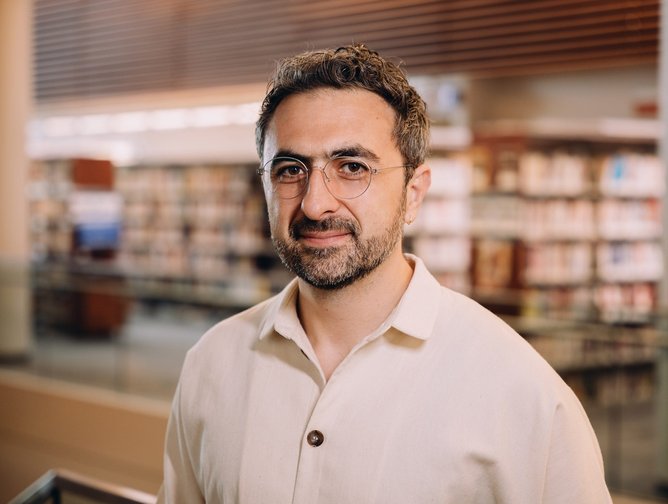
Mustafa Suleyman’s tenure as CEO of Microsoft AI could ultimately prove pivotal in the evolution of enterprise artificial intelligence.
As he enters his second year leading the division, his approach to developing AI systems that serve humanity while maintaining human oversight looks set to shift how the technology industry approaches advanced AI development.
The executive’s background as co-founder of DeepMind – which Google later acquired – and Inflection AI has positioned him uniquely to guide Microsoft’s consumer AI strategy. His portfolio spans the development of Copilot assistant, consumer AI products and research initiatives, all reporting directly to Microsoft CEO Satya Nadella.
When announcing the appointment, Satya noted: “I’ve known Mustafa for several years and have greatly admired him as a Founder of both DeepMind and Inflection, and as a visionary, product maker and builder of pioneering teams that go after bold missions.”
The creation of Microsoft’s AI division under Mustafa’s leadership aims to accelerate innovation across the company’s product portfolio while maintaining competitiveness in an increasingly dynamic AI marketplace.
Advancing human superintelligence development
The strategic direction Mustafa has established centres on what Microsoft AI terms Human Superintelligence (HSI), a framework that diverges from conventional approaches to advanced AI systems.
Writing on the Microsoft AI (MAI) blog in November, he articulated this vision: “At Microsoft AI, we’re working towards Human Superintelligence: incredibly advanced AI capabilities that always work for, in service of, people and humanity more generally.
“We think of it as systems that are problem-oriented and tend towards the domain specific. Not an unbounded and unlimited entity with high degrees of autonomy – but AI that is carefully calibrated, contextualised, within limits.”
The philosophy represents a departure from the pursuit of artificial general intelligence as an endpoint, instead focusing on highly-capable systems designed for specific applications. Mustafa says this approach allows Microsoft to prioritise keeping humanity in control while “accelerating our path towards tackling our most pressing global challenges”.
Under his direction, the company has established a proprietary in-house MAI Superintelligence Team dedicated to building frontier-grade models. Karen Simonyan, who joined as Chief Scientist alongside Mustafa from Inflection AI, leads technical efforts. The team draws expertise from researchers previously at Google DeepMind, Meta, OpenAI and Anthropic.
Copilot’s evolution towards personalised assistance
The most visible manifestation of Mustafa’s AI strategy appears in substantial upgrades to Microsoft’s Copilot assistant. The platform has evolved to function as a more personalised companion capable of executing actions based on user requests, moving beyond simple query responses.
Enhanced memory capabilities allow the software to retain information from previous conversations and develop an understanding of individual user preferences over time. This reduces the need for repetitive inputs and enables more contextual interactions across sessions.
The introduction of “actions” functionality extends Copilot’s capabilities to complete complex tasks, including arranging reservations or booking transport through browser integration. These developments reflect Mustafa’s emphasis on practical AI applications that directly serve user needs.
Satya acknowledged both the progress and challenges in a recent blog post: “We have learnt a lot in terms of how to both keep riding the exponential of model capabilities, while also accounting for their jagged edges.”

Prioritising containment in AI development
Mustafa’s perspective on AI safety distinguishes between two often-conflated concepts: containment and alignment.
Writing on LinkedIn earlier this month, he said: “I worry we’re putting the cart before the horse. You can’t steer something you can’t control. People often talk about containment and alignment in the same breath, but they’re not interchangeable or a package deal.”
He defines containment as the ability to establish boundaries on AI systems, while alignment addresses ensuring AI shares human values and serves human interests.
“Containment has to come first. Otherwise, alignment is the equivalent of asking nicely,” Mustafa explains.
This stance could influence how Microsoft and potentially the broader AI industry approach the development of increasingly capable systems.
By emphasising the necessity of control mechanisms before focusing on value alignment, Mustafa is advocating for a more cautious progression in AI capabilities – one that ensures developers maintain the ability to set hard limits on system behaviour regardless of the sophistication of the underlying models.