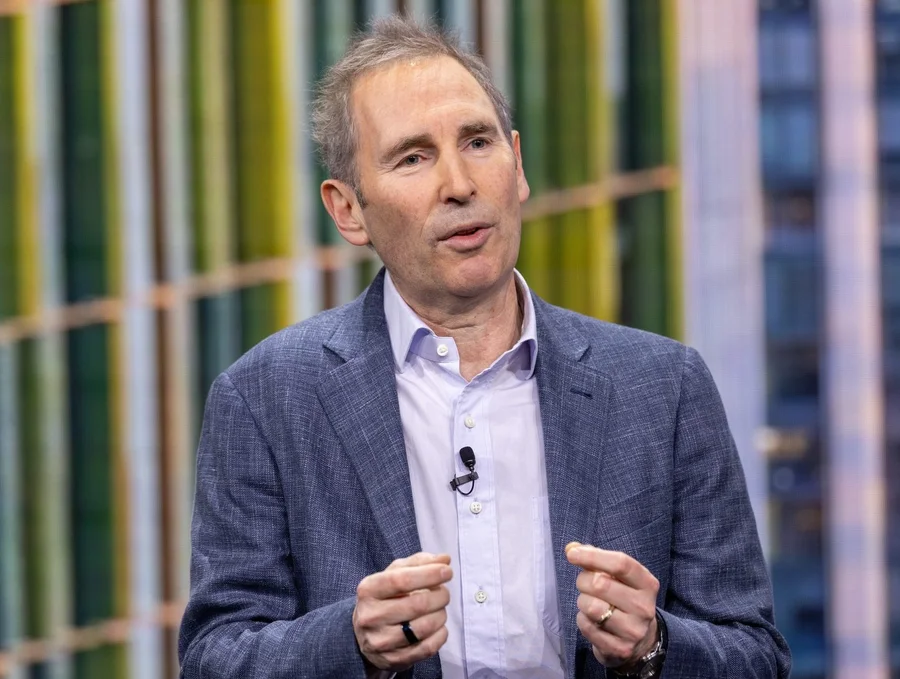
Amazon’s Andy Jassy is one of countless CEOs to have shared insight into how their companies are investing and innovating in the realm of AI during the World Economic Forum in Davos.
He discussed Amazon Web Services’ (AWS) strategic deal with OpenAI worth US$38bn over seven years, with AWS set to provide the infrastructure needed to support the AI specialist’s large-scale model development.
“We had a lot of conversations with OpenAI and we have a lot of respect for them,” Andy told The Information’s Jessica Lessin. “I think both teams really wanted to find a way to work together and we were both happy that we were able to build that agreement.”

The partnership secures AWS a critical role in powering OpenAI’s products, including the widely-used ChatGPT.
He added: “I hope we have a chance to deepen that relationship over time.”
By hosting and powering some of the most demanding AI workloads, AWS has strengthened its position in a highly-competitive space.
Advertising arm embraces AI precision
With ChatGPT’s new advertising feature on the horizon, questions are being raised about its impact on digital ad markets.
OpenAI states that adverts in ChatGPT are “always in support of that mission and making AI more accessible.” It also claims that adverts will be clearly labelled and will not affect chatbot responses.

Asked about the impact on Amazon’s advertising, Andy said: “There have always been a lot of ways that you can find products. There’s lots of places you can do research on products, that you can choose to buy products.
“People still largely start with Amazon who shop on Amazon,” he asserted, citing Amazon’s wide selection, low prices and fast delivery as key reasons.
Andy revealed that Amazon’s advertising unit heavily relies on data science and AI to refine ad targeting. Its AI and machine learning experts “make sure we’re putting items in front of people that are relevant to what they’ve searched for and what they’ve bought before,” he added.
As other platforms begin exploring AI-generated advertising, Amazon is continuing to integrate AI to improve personalised product recommendations, ensuring adverts match individual shopping patterns.
Tariff impact on pricing
Elsewhere, Andy addressed the impact of US President Donald Trump’s sweeping tariffs, particularly on Amazon’s operations and pricing.

“Some of the tariffs [are] creeping into some of the prices,” he told CNBC.
Andy explained that Amazon responded to the threat of tariffs by purchasing inventory ahead of time in anticipation of cost increases: “We did a lot of pre-buying in the early part of 2025 to enable us to try and keep prices as low as possible for customers. And a lot of our third-party sellers did a lot of forward staging in our fulfilment network for the same reasons.”
However, he acknowledged that some stock levels completely ran out by the autumn of 2025.
He continued: “Some sellers are deciding that they’re passing on those higher costs to consumers in the form of high prices, some are deciding that they’ll absorb it to drive demand and some are doing something in between.”
Of course, tariffs are not only impacting e-commerce, but the broader consumer goods market. The electric vehicle (EVs) sector, for example, is experiencing spiraling costs as imported battery components rise in price.
These added expenses are causing disruptions throughout supply chains and contributing to overall price inflation for consumers.