AI assistants have quietly become as fundamental to business operations as email or spreadsheets.
From hospital wards to car dashboards, these systems now handle tasks that consumed hours of human time just a few years ago.
The technology generates tens of billions in revenue annually, but the real story is in how it is changing work itself.
This ranking evaluates platforms on what matters: enterprise adoption, what they do well and measurable results.
10. ACE (Nvidia)
Revenue: US$130.5bn
Employees: 29,600
CEO: Jensen Huang
Founded: 1993
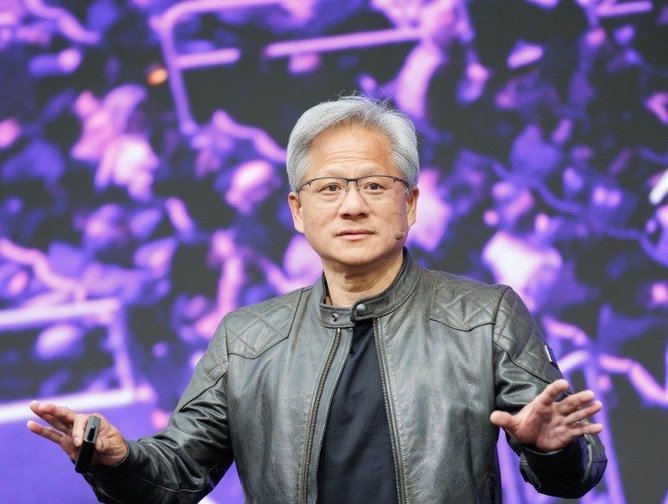
Nvidia takes a different route to classic voice assistants with Avatar Cloud Engine, building digital humans rather than traditional voice assistants.
The platform combines speech and animation models like Maxine and Audio2Face, all optimised to run on RTX hardware with minimal lag.
Independent software vendors and systems integrators use ACE to create visual and voice agents for retail, gaming and public services.
Nvidia’s betting that the next wave of customer experience will not just sound human, it will look human too.
9. Bixby (Samsung)
Revenue: US$220.84bn
Employees: 270,278
CEO: Young-Hyun Jun
Founded: 1938

Samsung’s assistant does not try to be everything to everyone – it focuses on making Galaxy devices work better through voice control, activating features like Live Translate or Interpreter with simple commands.
Bixby Vision scans business cards and lets users order products through image recognition, which actually saves time for mobile professionals.
The integration with Samsung’s mobile AI stack means it works across the company’s massive device base, making Galaxy AI features more accessible without extra steps.
8. Perplexity AI (Perplexity)
Revenue: US$100m
Employees: 1,600
CEO: Aravind Srinivas
Founded: 2022

Perplexity built an answer engine that shows its sources, which sounds basic until you have dealt with AI that can provide false information.
The platform targets knowledge workers who need reliable information fast: finance analysts, marketers and researchers.
Enterprises use Perplexity Pro for market research and sentiment analysis because it balances generating useful content with fact-checking.
Hitting a US$100m run rate in 2025 is impressive for a company founded in 2022, especially when taking on established search engines.
7. SoundHound AI (SoundHound)
Revenue: US$42.68m
Employees: 842
CEO: Keyvan Mohajer
Founded: 2005

SoundHound specialises in places where voice AI typically fails, like noisy drive-thrus, busy restaurants or vehicles.
The Houndify platform handles 25 languages and manages multi-step conversations even when there is background ambience.
This focus on vertical applications sets it apart from general-purpose assistants that struggle in real operational environments.
Businesses that operate in noisy and complex environments see value in technology built specifically for their challenges rather than adapting consumer tools that were not designed for these conditions.
6. Microsoft 365 Copilot (Microsoft)
Revenue: US$281.724bn
Employees: 228,000
CEO: Satya Nadella
Founded: 1975

Microsoft embedded Copilot throughout its 365 suite, using Azure and OpenAI to automate less-favoured work like drafting emails.
Public sector clients particularly value the security features, which matter when you can’t afford unauthorised AI tools accessing sensitive information.
Copilot Studio lets organisations customise the assistant for internal workflows, so companies can define how it handles their specific processes.
The smart move here is integration with software enterprises already use. Adoption becomes straightforward when the AI lives inside tools people open every day.
5. Cerence Drive (Cerence)
Revenue: US$53m
Employees: 1,400
CEO: Brian Krzanich
Founded: 2019
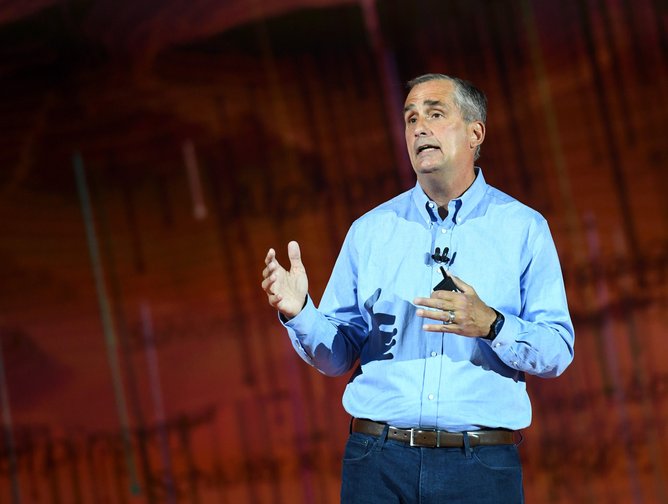
Cerence owns conversational AI for cars, working with major manufacturers and suppliers on embedded and cloud-based systems.
The platform handles navigation, vehicle functions and entertainment through natural language, which matters more than it sounds – since controlling complex car systems safely while driving requires technology that understands context.
The automotive focus gives Cerence an edge because cars present unique challenges around safety, compliance and integration that general assistants were not built to solve.
4. Siri (Apple)
Revenue: US$408.62bn
Employees: 164,000
CEO: Tim Cook
Founded: 1976

Apple processes Siri requests on-device rather than sending everything to the cloud – and the newer Apple Intelligence integration expands what that means.
App Intents and Shortcuts connect Siri to enterprise systems like SAP and Salesforce, enabling hands-free inventory management or meeting optimisation.
The privacy angle resonates with corporations handling sensitive data, with local processing meaning information does not leave the device unless necessary.
Apple focuses Siri on device-native actions and personal context rather than trying to win at conversation, which suits organisations that prioritise data protection.
3. Alexa (Amazon)
Revenue: US$670.03bn
Employees: 1,608,000
CEO: Andy Jassy
Founded: 1994
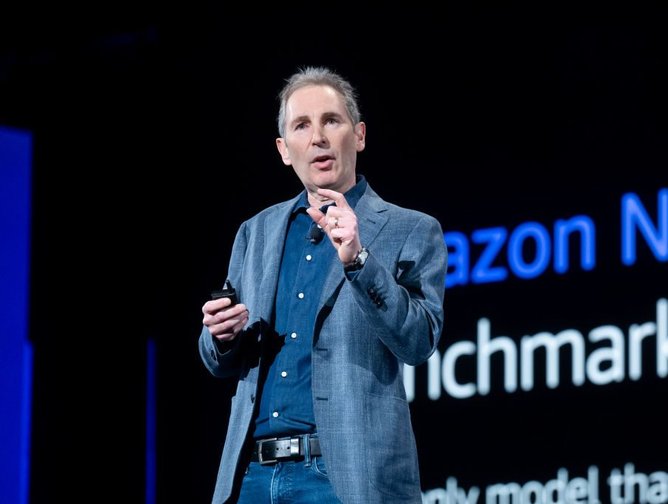
Alexa runs on 300m devices, but the enterprise applications reveal what the platform can really do.
Cedars-Sinai Hospital in Los Angeles uses Alexa for patient requests like medication, television controls and basic needs – reducing pressure on nursing staff for routine tasks.
The AWS backend scales these deployments across hospitality and senior living facilities, where voice interfaces handle operational workflows in regulated environments.
Consumers know Alexa for smart home control, but these use cases show how the platform tackles business problems.
2. ChatGPT (OpenAI)
Revenue: US$4.3bn
Employees: 3,531
CEO: Sam Altman
Founded: 2015

OpenAI’s platform changed the conversation around AI when it launched and the business impact keeps growing.
ChatGPT handles customer service automation, content generation and operational workflows through its API.
HYGH uses it for digital advertising, ENEOS applies it in manufacturing, CNA employs it in newsrooms.
OpenAI uses its own API internally for contract reviews and sales productivity, which says something about confidence in the technology.
The projected annual recurring revenue for 2025 represents 3,628x growth since 2020. That trajectory reflects ChatGPT’s role as the catalyst that made conversational AI a mainstream business tool rather than an experiment.
The developer ecosystem and API adoption now span industries from healthcare to financial services, creating network effects that compound the platform’s value.
1. Gemini (Google)
Revenue: US$371.39bn
Employees: 180,981
CEO: Sundar Pichai
Founded: 1998
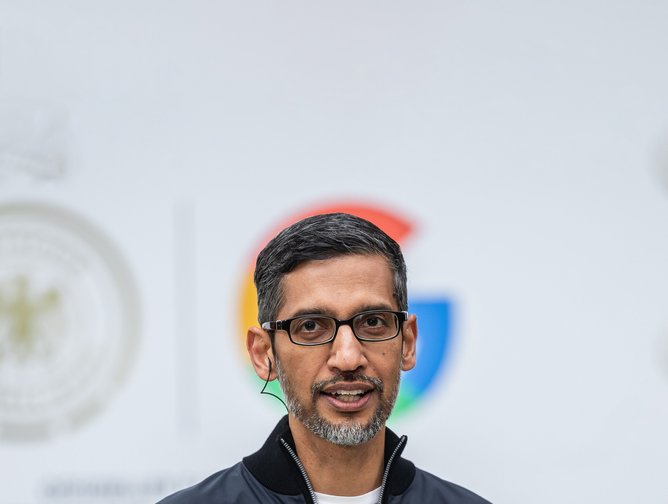
Google’s assistant wins on a combination that is hard to beat: massive scale, deep integration and compliance certifications that unlock regulated industries.
Gemini connects DeepMind research with Workspace applications that billions of people already use daily.
The healthcare numbers tell the story best. Sami Saúde achieved 13% productivity gains by automating administrative work and improving diagnostic accuracy through AI-generated patient summaries.
Meanwhile, L’Oréal employees save 45 minutes daily on routine tasks, with the company targeting an hour saved per employee across the workforce.
These are measurable returns on investment in environments where mistakes carry real consequences.
Google’s combination of Workspace integration, security certifications, and proven results gives enterprises the confidence to deploy AI at scale across sensitive business functions.