What started as experimental tools producing surreal images has evolved into a multi-billion dollar industry reshaping how enterprises create visual content.
Research projects and niche applications in the image generation market have given way to enterprise-grade platforms woven into the workflows of millions of users worldwide.
The market now stretches from open-source models serving developers to fully integrated corporate solutions backed by legal indemnification that would make any general counsel breathe easier.
Competition has intensified as major technology companies pour resources into Gen AI capabilities, while independent labs prove that technical excellence and lean operations can not only coexist but thrive.
Here, AI Magazine takes a look at the Top 10 Image Generators, which are revolutionising visual content.
10. Ideogram
Founded: 2022
CEO: Mohammad Norouzi
Employees: 50

Ideogram stands out in the AI image generator space for its knack at rendering crisp, legible text within visuals – a game-changer for designers crafting logos, posters or marketing graphics.
Founded by ex-Google Brain researchers in Toronto, the company raised US$80m in Series A funding to build a proprietary model excelling in photorealism, complex prompts and high-res outputs up to 2K.
Offerings include inpainting for edits, team collaboration boards, batch generation on Pro plans and a freemium model with daily free credits.
9. Leonardo AI (Canva)
Founded: 2022
CEO: Melanie Perkins
Employees: 3,500
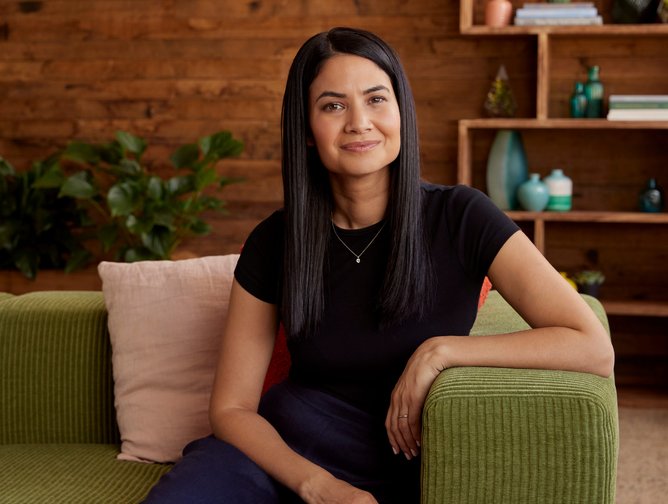
JJ Fiasson and collaborators founded Leonardo AI in 2022, building a platform specialising in controllable asset generation and motion-enhanced visuals.
Canva snapped up the company in July 2024, wasting no time integrating its technology into Magic Studio, which has been used billions of times by Canva’s massive user base.
The acquisition accelerates features like visual storyboarding for writers and designers, supporting CEO Melanie Perkins’ mission to empower Canva’s 180 million users with cutting-edge visual AI capabilities.
8. Stable Diffusion (Stability AI)
Launched: 2022
CEO: Prem Akkaraju
Employees: 150+

Stable Diffusion, created by Stability AI, is a flagship open-source text-to-image model that transforms textual prompts into high-quality, photorealistic images.
Its adaptable architecture supports applications from concept art and product visualisation to architectural rendering and advertising.
Praised for its balance of creative control and computational efficiency, Stable Diffusion underpins a global ecosystem of developers and enterprises, offering scalable image generation tools and integrations across design, media and AI development platforms.
7. Midjourney
Founded: 2022
CEO: David Holz
Employees: 100+

In 2025, David Holz’s independent research lab pulled off something remarkable in an industry focused on headcount growth: over US$200m in annual recurring revenue with only 50 employees – all while turning down venture capital money.
Midjourney specialises in hyper-aesthetic and photorealistic imagery through a proprietary diffusion model, maintaining a product-first focus via Discord rather than building enterprise sales teams.
The company has become the go-to aesthetic benchmark for artistic conceptual work, proving that technical excellence and capital efficiency are not mutually exclusive.
6. Getty Images Gen AI
Launched: 2023
CEO: Craig Peters
Employees: 1,700
Revenue: US$240m
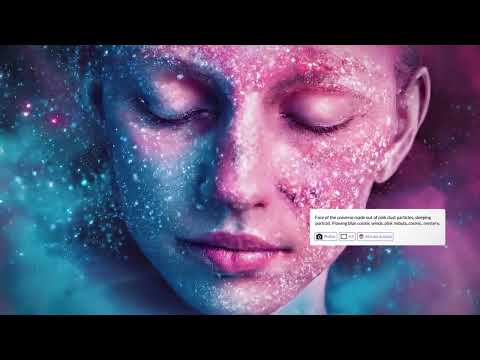
Getty Images launched its Gen AI tool in 2023 with a laser focus on the high-compliance commercial market.
Trained exclusively on Getty’s licensed creative library using the NVIDIA Picasso Edify model, it specialises in commercial safety and consistency rather than pushing creative boundaries.
For enterprises requiring legal certainty around AI-generated content, Getty offers something competitors don’t match.
The approach trades some creative flexibility for the peace of mind that comes with decades of licensing expertise backing every generated pixel.
5. Meta AI (Llama)
Launched: 2023
CEO: Mark Zuckerberg
Employees: 75,000+ (Meta)
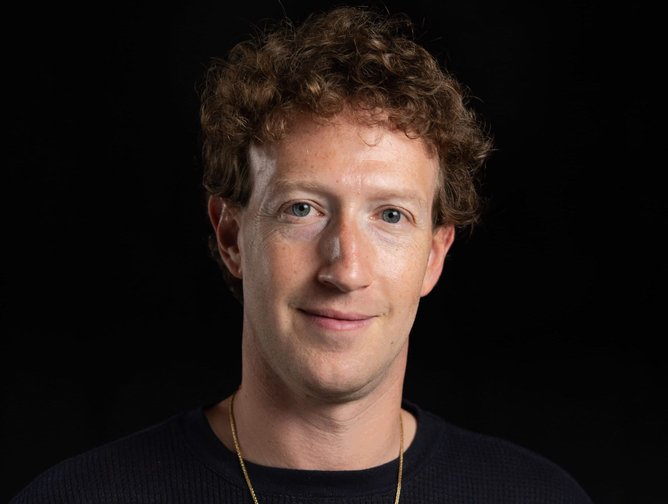
Meta AI, powered by the open-source Llama models, delivers free AI image generation integrated across Facebook, Instagram, WhatsApp and Messenger, making it a go-to for billions in casual social and business visuals.
Developed by Meta’s FAIR team under leaders like Chief AI Scientist Yann LeCun, it excels in photorealistic outputs, quick iterations and multimodal capabilities tied to chat.
Offerings include text-to-image via Imagine, editing tools and enterprise-safe guardrails, with no paywalls boosting massive adoption.
4. DALL-E and GPT Image 1 (OpenAI)
Launched: 2021
CEO: Sam Altman
Employees: 4,000+

OpenAI replaced DALL-E 3 with GPT Image 1 in March 2025, marking an architectural shift toward native multimodal image generation baked directly into its core LLM.
The system excels at prompt adherence, text rendering and image editing from reference inputs, but its real success comes from accessibility rather than technical supremacy.
Integrated through ChatGPT and Microsoft Copilot, GPT Image 1 simplifies visual creation for marketers and general users who need results without learning specialised tools or wrestling with complex parameters.
3. Adobe Firefly
Launched: 2023
CEO: Shantanu Narayen
Employees: ~31,000
Revenue: US$5.99bn
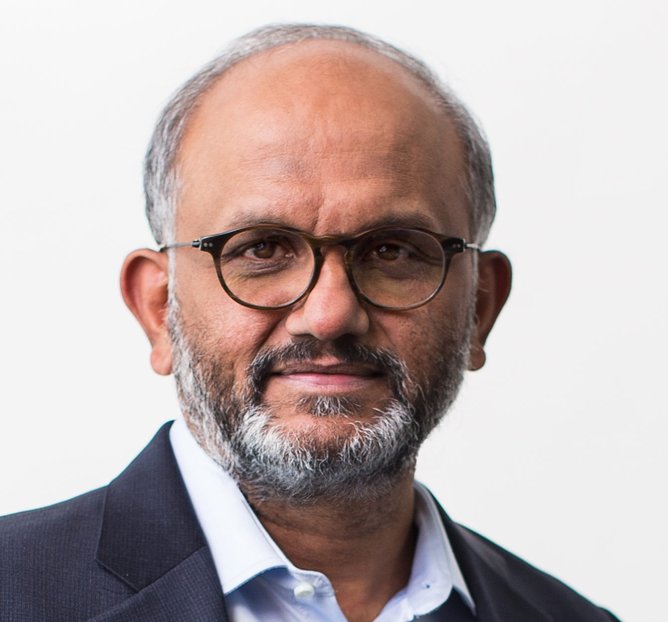
Adobe Firefly sits squarely at the intersection of technical capability and legal certainty, a position Adobe has cultivated deliberately.
Integrated across Creative Cloud and trained exclusively on licensed Adobe Stock and public domain assets, Firefly offers uncapped legal indemnification for commercial use.
Under Shantanu Narayen, the platform has helped clients like Deloitte Digital slash asset production timelines while maintaining brand consistency across 30 international markets.
For enterprises where legal risk matters as much as creative output, Firefly’s approach proves compelling.
2. Microsoft Designer/Image Creator
Launched: 2022
CEO: Satya Nadella
Employees: 228,000
Revenue: US$281.7bn

Microsoft Designer integrates directly into the M365 Copilot suite, leveraging OpenAI’s GPT Image 1 to generate customised visuals, cards and social posts without users ever leaving their workflow.
The platform’s specialisation is democratising design for enterprise users. Internal communications teams can now create high-resolution custom hero images using text prompts, eliminating bottlenecks that previously required dedicated designers or expensive external agencies.
Satya Nadella’s AI-first strategy positions Designer as a utility layer enhancing productivity across Microsoft’s sprawling global ecosystem – making professional design accessible to millions of Microsoft 365 subscribers who would never dream of opening Photoshop.
The real advantage is distribution through existing enterprise software contracts, sidestepping the need for separate procurement processes that can drag on for months.
1. Nano Banana Pro (Google/Higgsfield)
Launched: 2025
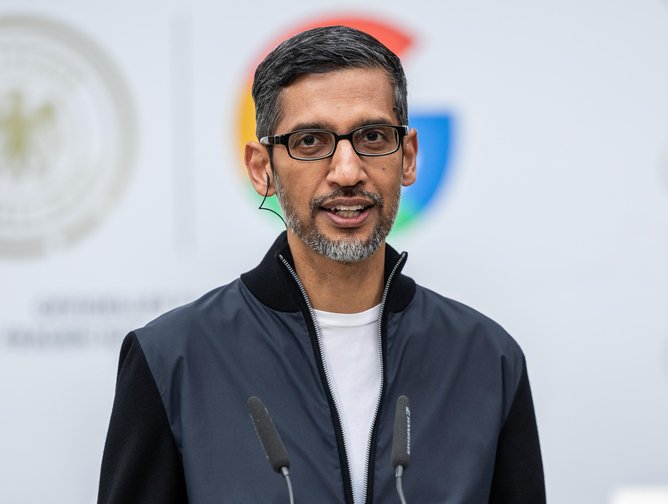
CEO: Sundar Pichai
Employees: ~190,000
Revenue: US$385.47bn
Nano Banana Pro, powered by Google’s Gemini 3.0 engine, is fast establishing new benchmarks for photorealistic style adherence that occasionally cross into unsettling territory.
Available within Google’s core platforms including Gemini and NotebookLM, it specialises in complex visual tasks such as 4K photorealism and multi-reference scene combination.
The model produces results so realistic that users are explicitly cautioned to disclose AI usage – highlighting both its technical fidelity and the sheer scale of Google’s computational resources.
Integration within Google’s ecosystem gives it distribution advantages competitors cannot match, reaching millions of users through existing products rather than requiring standalone adoption and all the friction that entails.
That structural advantage, combined with access to proprietary training data and integration points across Search, Gmail, Docs and YouTube, creates a flywheel effect that smaller competitors will struggle to replicate regardless of how brilliant their technical capabilities might be.