Salesforce is positioning itself at the forefront of a fundamental shift in how businesses approach revenue operations, leveraging AI to transform the traditionally cumbersome quote-to-cash process into a streamlined, automated system that promises to reshape enterprise sales strategies.
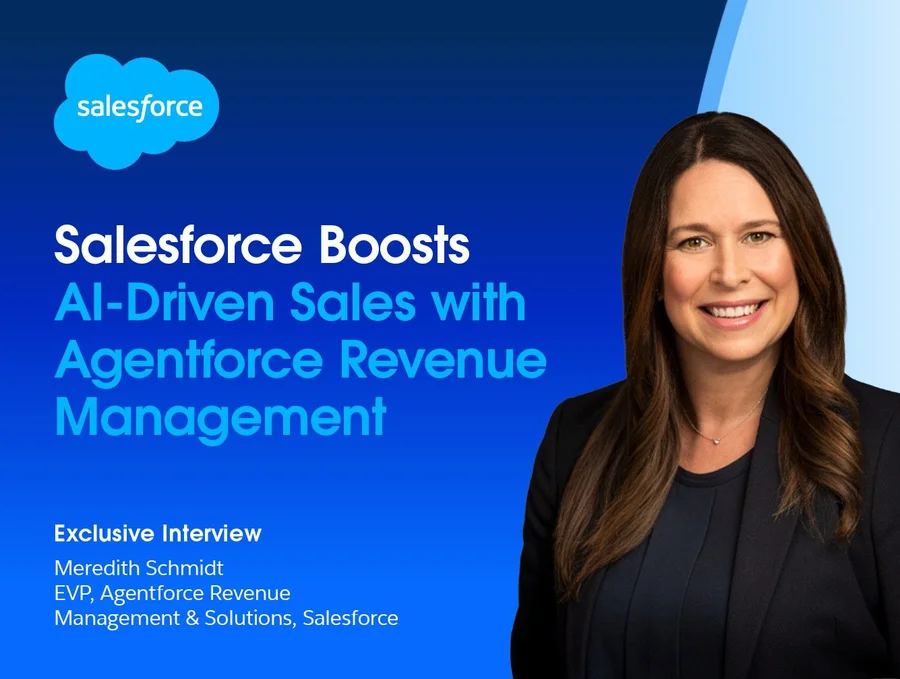
Meredith Schmidt, Executive Vice President of Revenue Cloud and Solutions at Salesforce, describes the company as “the number one AI CRM where people and AI agents work side by side to drive customer success”.
This vision extends far beyond traditional customer relationship management, encompassing what Meredith characterises as a comprehensive platform designed to integrate AI capabilities across every aspect of business operations.
Partnering with Kaseya
The transformation is particularly evident in Salesforce’s partnership with Kaseya, where Revenue Cloud is being deployed to fundamentally reimagine customer experience.
“We’re working together to automate and simplify complex processes, giving sellers more time to focus on what matters most: the customer,” Meredith shares. The initiative represents a shift towards what she calls “true digital transformation”, encompassing not only technology adoption but a complete restructuring of how businesses engage with customers.
Central to this transformation is the establishment of self-service channels that meet customers on their own terms.
Meredith says that this approach represents “fixing the revenue engine, standing up modern buying channels and using AI to drive smarter engagement”. The goal extends beyond operational efficiency to creating what Kaseya describes as effortless customer transactions that drive loyalty and growth.
The third wave of CPQ: Driving efficiency with AI
Meredith identifies this moment as the beginning of the “third wave of CPQ”, which stands for configure, price and quote. The evolution she describes moves from initial digitisation efforts that replaced spreadsheets to the second wave’s focus on subscription and recurring revenue models.
“Now, companies need more than just a standalone CPQ tool,” Meredith says. “They need the flexibility to move quickly to respond to changing market dynamics and competitive pressure.”
This third wave distinguishes itself through the integration of AI agents across the entire quote-to-cash process. Meredith positions this development as moving beyond traditional point solutions towards comprehensive revenue platforms, capable of capturing sales from any channel with any revenue model.
The quote-to-cash process presents particular opportunities for AI optimisation, according to Meredith, because it is “data-heavy, rules-driven and operationally complex”.
Every step requires validation of information from multiple systems while applying intricate business logic for pricing, approvals, contract terms and compliance requirements.
Traditional approaches create significant operational bottlenecks, with teams dedicating excessive time to repetitive tasks that, while low-value, must be executed with precision to prevent costly downstream errors in billing or revenue recognition.
Meredith argues that consolidating the entire quote-to-cash process onto a single platform creates “an incredible unlock for efficiency, completely disrupting revenue operations as we know them”.
The promise extends to increasing capacity across sales, finance and operations teams while harnessing unified data with AI to drive what Meredith describes as “smarter decisions, automate complex processes and surface revenue opportunities in real time”. This represents a fundamental reimagining of how enterprises approach revenue generation, moving from reactive, manual processes towards proactive, AI-driven systems.
“This third wave is driven by the opportunity for AI and agents across the entire quote-to-cash process,” Meredith says.